


Table of Contents
- 1. What Is a Solution VoIP and How VoIP Works in Practice?
- 2. How a Solution VoIP Works Behind the Scenes
- 3. Solution VoIP vs Traditional Phone Infrastructure
- 4. Strategic Advantages of Implementing a Solution VoIP
- 5. Business Benefits of an Integrated Solution VoIP Environment
- 6. Unified Mobile Experience
- 7. Scaling Enterprise Call Centers with Solution VoIP
- 8. Cost Efficiency Within a Modern Solution VoIP Deployment
- 9. Advanced Calling Features and Integrations
- 10. Core Components of a Secure & Enterprise-Ready Solution VoIP Platform
- High Call Quality & Performance Optimization
- Secure Video & Encrypted Communications
- Enterprise-Grade VoIP Security and Compliance Controls
- 24/7 Monitoring & Support Infrastructure
- Documented Uptime & SLA Commitments
- Security Certifications & Compliance Standards
- Cost Efficiency Without Infrastructure Burden
- Why These Components Matter
- 11. Reliability and Redundancy in a Solution VoIP Infrastructure
- 12. Migration & Deployment Checklist
- 13. Industry Use Cases & ROI
- 14. VoIP Troubleshooting and Support
- 15. How to Evaluate a Solution VoIP Provider
- 16. Next Steps with Whippy AI
- 17. Frequently Asked Questions
Try Whippy for Your Team
Experience how fast, automated communication drives growth.

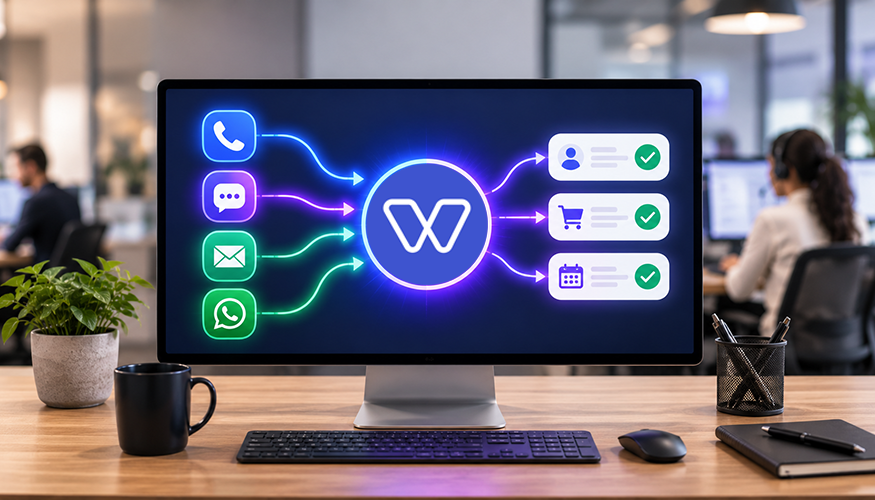
A solution VoIP is more than internet-based calling. It is the architecture behind modern business communication. Instead of managing disconnected systems, companies deploy a unified VoIP communication solution that consolidates voice, messaging, analytics, and automation into one scalable platform.
Unlike basic VoIP services that only replace traditional phone lines, a complete solution VoIP integrates call routing, CRM synchronization, compliance controls, reporting dashboards, and call center functionality into a single environment.
In this guide, you’ll learn how a solution VoIP works, what components matter most, how it supports call centers and remote teams, and how to evaluate the right provider for long-term growth.
What Is a Solution VoIP? A solution VoIP is a fully integrated cloud-based communication platform that enables businesses to manage voice calls, messaging, video meetings, analytics, and automation within a single scalable system. It replaces traditional phone infrastructure while improving flexibility, security, and operational efficiency.
1. What Is a Solution VoIP and How VoIP Works in Practice?
A VoIP phone service uses Internet Protocol VoIP technology to change your voice calls into digital packets. It sends them over your network instead of old phone wires. This technology lets you make clear, reliable calls using your existing internet connection, without needing separate phone lines.
Key components include:
- IP Phones or softphone apps: Special devices or apps on your desktop and mobile phones that let you make and receive calls digitally.
- SIP trunks or VoIP termination services: These services connect your digital calls to the regular public phone network, ensuring smooth communication with anyone using traditional phone services.
- Cloud or On-site PBX: A digital system that manages your phone calls. It routes calls to the right people, handles voicemail, provides call waiting, forwarding, call recording, and many other useful business features.
2. How a Solution VoIP Works Behind the Scenes
While most users experience a solution VoIP as a simple calling interface, the underlying architecture is built on advanced networking protocols and intelligent routing systems. Understanding how a modern VoIP solution architecture operates behind the scenes helps organizations evaluate reliability, security posture, scalability, and long-term deployment viability.
SIP Protocol (Session Initiation Protocol)
SIP is the signaling protocol that initiates, manages, and terminates voice sessions. It establishes the connection between callers, authenticates endpoints, and negotiates session parameters such as codec selection and encryption. In a solution VoIP environment, SIP enables seamless communication across devices, locations, and networks.
RTP Media Streams
Once a call is established through SIP, the actual voice data is transmitted using RTP (Real-Time Transport Protocol). RTP delivers audio packets in real time, ensuring minimal delay and smooth call quality. Advanced solution VoIP platforms optimize RTP streams to reduce latency, jitter, and packet loss.
Codecs (G.711, Opus, and Others)
Codecs compress and decompress voice data to balance audio quality and bandwidth usage.
- G.711 provides high-quality audio but requires more bandwidth.
- Opus adapts dynamically to network conditions, maintaining clarity even under fluctuating bandwidth.
Modern solution VoIP systems intelligently select codecs to optimize both performance and efficiency.
Session Border Controllers (SBCs)
SBCs act as security and traffic control gateways between networks. They protect against fraud, manage encryption, enforce policies, and ensure interoperability between carriers. In enterprise-grade solution VoIP deployments, SBCs are critical for maintaining secure and stable call environments.
Redundancy Routing
To maintain uptime, a solution VoIP platform routes calls across multiple carrier paths and geo-redundant data centers. If one network path fails, traffic is automatically rerouted without disrupting active calls. This redundancy model supports high availability and disaster recovery planning.
QoS Prioritization (Quality of Service)
QoS prioritizes voice traffic over less time-sensitive data such as email or file downloads. By marking voice packets for priority handling, networks ensure consistent call quality even during high traffic periods. Proper QoS configuration is essential for maintaining reliable VoIP performance.
Why This Technical Layer Matters
A solution VoIP is not just a cloud phone replacement. It is a software-defined communication architecture built on secure signaling, real-time media transmission, intelligent routing, and network optimization. For organizations seeking a clear understanding of VoIP infrastructure explained in practical terms, these components illustrate how signaling, media routing, redundancy, and security layers operate together within a complete solution VoIP environment.
3. Solution VoIP vs Traditional Phone Infrastructure
Many organizations still rely on legacy phone infrastructure built around physical PBX hardware and fixed telephone lines. While these systems were once the standard, they lack the flexibility, scalability, and integration depth required in modern business environments.
A solution VoIP replaces hardware-bound infrastructure with a cloud-based communication architecture that integrates voice, messaging, analytics, and automation into a single scalable environment.
Below is a direct comparison:
Category | Solution VoIP | Traditional Phone Infrastructure |
|---|---|---|
Infrastructure Model | Cloud-based, software-defined architecture | On-premise PBX hardware with physical lines |
Hardware Requirements | Minimal; IP phones or softphones | Dedicated PBX servers, wiring, maintenance |
Scalability | Instant user and number expansion | Limited by hardware capacity |
Remote Workforce Support | Fully remote-ready via apps and web access | Requires call forwarding or VPN workarounds |
Integration Capability | Native CRM, helpdesk, API integrations | Limited or expensive custom integrations |
Compliance Flexibility | Configurable encryption, logging, role-based access | Often requires third-party add-ons |
Analytics Visibility | Real-time dashboards, call insights, reporting | Minimal reporting, often manual |
Deployment Speed | Days or hours | Weeks with physical installation |
Organizations seeking long-term agility, automation, and data visibility increasingly migrate from traditional infrastructure to a fully integrated solution VoIP platform. The shift is not just technological, it transforms how teams collaborate, support customers, and scale operations.
4. Strategic Advantages of Implementing a Solution VoIP
Traditional phone systems struggle to keep pace with today’s fast-moving, remote-friendly workplaces. Upgrading to a cloud-based VoIP platform unlocks advantages that old hardware simply can’t match:

Scalable Deployment Flexibility
Scale on your terms, spin up new numbers or remove unused seats in just a few clicks. No technicians, no downtime, and no surprise costs when your team expands or contracts.Device-Agnostic Workforce Enablement
Turn any laptop, tablet, or smartphone into a full-featured business phone. Whether your staff is in the office, on the road, or working from home, they can place and receive calls with the same professional caller ID and features.Centralized Communication Governance
Voice, video meetings, SMS, and internal chat all live in a single, intuitive interface. This means less app-hopping, fewer missed messages, and a clear, searchable record of every conversation.Seamless Integrations
Connect VoIP with the tools you already rely on (CRMs, helpdesk platforms, calendar apps, and more) so caller details, tickets, and notes pop up automatically. Check out our VoIP integrations page to see how quickly you can plug everything in.Lower Costs & Predictable Billing
Eliminate expensive on-prem equipment, long-distance fees, and maintenance contracts. A straightforward monthly subscription keeps budgeting simple while still giving you enterprise-grade features.Reliability & Security Built In:
Enjoy carrier-grade uptime backed by geo-redundant data centers and encrypted call traffic that safeguards sensitive information and maintains compliance.
Implementing a solution VoIP platform represents a structural shift in how organizations manage communication, visibility, compliance, and distributed workforce coordination.
5. Business Benefits of an Integrated Solution VoIP Environment
An integrated VoIP solution connects every call, message, and meeting to the business applications your team already relies on, transforming communication into structured, automated workflows that improve visibility and performance.
CRM Pop-Ups & Smart Automation
Incoming calls trigger instant screen-pops with customer records, auto-log notes, create tasks, and schedule follow-ups, so reps focus on people, not data entry.
True Omnichannel Routing
A single intelligent queue distributes voice, SMS, chat, and email to the best-qualified agent, ensuring customers never repeat themselves and CSAT scores climb.
Real-Time Analytics & Actionable Reporting
Live dashboards track call volume, wait times, handle times, and agent performance, while drill-down recordings and transcripts power targeted coaching.
Enterprise-Grade Calling Features
Features include built-in auto-attendants, visual IVR, dynamic call queues, voicemail-to-email, voicemail transcription, and AI transcription, giving even small teams the power of a full contact center.
See How a Fully Integrated Solution VoIP Works in Practice
Understanding the architecture is important, seeing it in action is even better.
Explore how Whippy delivers a fully integrated solution VoIP platform that unifies voice, messaging, automation, and analytics in one scalable environment.
See how Whippy’s solution VoIP platform works ↗
6. Unified Mobile Experience
Modern teams need the flexibility to stay connected wherever they are, and a robust VoIP mobile app makes that possible. With Whippy, your team can make unlimited calls using a business number and easily handle any inbound call on the go. You can also host or join video meetings and send chat messages or SMS, all from one easy-to-use platform.
The built-in push-to-talk feature enables fast, voice-driven communication for quick updates and coordination between team members. It’s a complete office phone system in your pocket, designed to keep teams productive and responsive, no matter where they’re working from.
7. Scaling Enterprise Call Centers with Solution VoIP
Modern contact centers require more than basic call handling. Scaling VoIP for call centers demands intelligent routing logic, SLA visibility, workforce distribution tools, and AI-driven performance analytics within a resilient solution VoIP framework.
Intelligent Queue Management Logic
Enterprise solution VoIP systems use dynamic queue algorithms to route calls based on skill sets, availability, priority levels, language preferences, and historical performance. Advanced routing logic reduces wait times while ensuring customers are connected to the most qualified agents.
SLA Monitoring & Performance Governance
Service Level Agreements (SLAs) are critical in high-volume environments. A solution VoIP platform provides real-time SLA tracking, queue thresholds, and escalation workflows to maintain response-time targets. Supervisors gain live visibility into average handle time, abandonment rates, and resolution metrics.
Workforce Distribution & Remote Agent Enablement
Cloud-based solution VoIP architecture supports distributed teams across multiple locations. Agents can securely log in from remote environments while maintaining consistent routing rules, call recording standards, and compliance controls. This flexibility supports hybrid and global workforce models.
AI-Powered Call Insights
Advanced deployments integrate AI-driven transcription, sentiment analysis, keyword tracking, and performance analytics. These insights help organizations identify coaching opportunities, detect compliance risks, and improve overall service quality.
Omnichannel Routing Architecture
A modern solution VoIP environment unifies voice, SMS, chat, and email into a single routing framework. Customers are directed to the appropriate channel and agent without repeating information. This omnichannel architecture improves resolution speed and customer satisfaction.
Why Call Center Architecture Matters
Scaling enterprise operations requires more than adding phone lines. A strategically deployed solution VoIP platform enables intelligent routing, measurable performance management, distributed workforce coordination, and AI-enhanced visibility, all within a unified communication infrastructure.
Organizations evaluating providers should examine queue logic capabilities, SLA tooling, analytics depth, and omnichannel routing design before committing to long-term deployment.
8. Cost Efficiency Within a Modern Solution VoIP Deployment
A properly deployed solution VoIP reduces infrastructure overhead, eliminates hardware refresh cycles, and transitions communication costs from capital expenditure to predictable operational expense.
Rather than maintaining physical PBX systems and carrier contracts, organizations benefit from subscription-based scalability, simplified billing models, and lower long-term maintenance risk.
This financial flexibility supports distributed growth without requiring additional infrastructure investment.
9. Advanced Calling Features and Integrations
Top providers offer deep VoIP integrations and rich calling features:
Feature | What It Does |
|---|---|
Auto-Attendant & IVR | Custom menus, time-based routing, self-service options |
Call Recording & Analytics | Records calls, analyzes tone, creates transcripts |
Collaboration | Video calling, screen sharing, chat, presence status |
CRM & Helpdesk Integrations | Pop-ups, automated ticket creation, quality tagging |
Developer APIs | Webhooks and call-control APIs for custom workflows |
These tools keep your team in one platform and cut tool-switching.
10. Core Components of a Secure & Enterprise-Ready Solution VoIP Platform
A complete solution VoIP platform must go beyond basic calling features. Enterprise environments require high call quality, advanced security architecture, compliance support, and operational reliability built into the core infrastructure.
Below are the foundational components that define a secure and scalable solution VoIP deployment.
High Call Quality & Performance Optimization
Enterprise-grade solution VoIP platforms use adaptive codecs, jitter buffering, and intelligent packet handling to maintain clear, HD-quality audio. Combined with Quality of Service (QoS) prioritization and redundancy routing, these mechanisms ensure stable communication even during network congestion.
A reliable platform should also support real-time monitoring of MOS scores, latency, and packet loss to proactively address performance issues.
Secure Video & Encrypted Communications
Modern solution VoIP environments often include video meetings and unified messaging. Secure deployments implement:
- TLS (Transport Layer Security) to encrypt signaling and session data
- SRTP (Secure Real-Time Transport Protocol) to encrypt live voice and video streams
This prevents interception, tampering, or unauthorized access while communications travel across public networks.
Enterprise-Grade VoIP Security and Compliance Controls
A complete solution VoIP platform must address VoIP security and compliance through encryption standards, identity authentication frameworks, access governance policies, and audit logging mechanisms.
STIR/SHAKEN Caller Authentication
Digitally signs and verifies outbound calls to prevent caller ID spoofing and fraud, improving call trust and answer rates.
10DLC Compliance for Business Messaging
Ensures lawful and high-deliverability SMS traffic in the United States through proper campaign registration and carrier compliance management.
Role-Based Access Controls (RBAC)
Restricts administrative access based on user roles, limiting exposure to sensitive data such as call recordings, routing configurations, and reporting dashboards.
Audit Logging & Activity Tracking
Maintains detailed records of login activity, configuration changes, and routing modifications to support governance, internal controls, and regulatory audits.
HIPAA-Ready Configurations
For healthcare and regulated industries, properly configured solution VoIP deployments can support encrypted communications, access restrictions, and documentation standards aligned with HIPAA requirements.
24/7 Monitoring & Support Infrastructure
Enterprise solution VoIP providers maintain continuous network monitoring, geo-redundant data centers, and dedicated support teams to ensure uptime and rapid issue resolution. A documented SLA and transparent uptime reporting are essential indicators of platform reliability.
Documented Uptime & SLA Commitments
Enterprise-ready solution VoIP providers should publish clear Service Level Agreements (SLAs). Look for platforms offering 99.99% or higher uptime guarantees, supported by geo-redundant infrastructure and transparent performance reporting. A documented SLA demonstrates operational maturity and accountability.
Security Certifications & Compliance Standards
Reputable solution VoIP providers undergo independent security assessments and maintain compliance with recognized standards such as SOC 2, HIPAA-ready configurations, and GDPR-aligned data handling practices. Third-party audits and documented security frameworks signal strong internal governance and risk management discipline.
Cost Efficiency Without Infrastructure Burden
A modern solution VoIP deployment eliminates on-premise PBX hardware, reduces long-distance fees, and removes maintenance overhead. Subscription-based pricing models provide predictable operational costs while maintaining enterprise-level performance and compliance capabilities.
Why These Components Matter
A solution VoIP is not merely a cloud-based replacement for traditional phone lines. It is a secure, software-defined communication architecture designed to support scalability, compliance, automation, and operational visibility.
Organizations evaluating providers should examine not only feature lists, but also the underlying security controls, encryption standards, redundancy strategies, and governance capabilities that define a truly enterprise-ready solution VoIP platform.
11. Reliability and Redundancy in a Solution VoIP Infrastructure
Even the best VoIP service needs backup plans:
- Geo-Redundant Data Centers: Automatically reroutes calls if one site fails.
- Active Monitoring & Self-Healing Networks: Uses AI to spot and fix glitches before they affect calls.
- SIP Trunk Diversity: Multiple carrier paths prevent single-point failures.
- Smart QoS Templates: Prioritizes voice traffic over other data to avoid congestion.
Ask vendors for real SLA stats and MTTR metrics. A claimed 99.999% uptime is only valuable if backed by clear records.
Carrier-Grade Network Partnerships
Enterprise solution VoIP environments operate on Tier-1 carrier networks and redundant global infrastructure. Strategic carrier partnerships ensure low latency, reliable call termination, and improved caller authentication standards such as STIR/SHAKEN compliance. Carrier-grade routing significantly reduces failure points and improves global call stability.
12. Migration & Deployment Checklist
This section serves as a practical VoIP deployment guide, outlining the structured phases required to transition from legacy infrastructure to a fully operational solution VoIP platform. Moving to a solution VoIP provider requires a structured VoIP migration checklist to ensure number continuity, network readiness, and staged rollout coordination.
Phase | Key Actions | Deliverable |
|---|---|---|
Discovery | Audit existing numbers, devices, and carrier contracts | Port-out list and full hardware inventory |
Network Assessment | Measure jitter, latency, and overall WAN capacity | QoS policy draft and network upgrade plan |
Pilot | Roll out the new VoIP system to a small test team | Feedback logs and documented success criteria |
Training | Conduct live training sessions and record tutorial videos | Training deck and end-user checklist |
Full Cutover | Port production numbers and retire legacy lines | Final acceptance sheet signed off by stakeholders |
Post-Launch Review | Verify call quality and SLA performance | Continuous-improvement and optimization roadmap |
A structured migration framework minimizes operational disruption, protects number continuity, and ensures controlled deployment across departments and locations.
13. Industry Use Cases & ROI
Before diving into the numbers, it helps to see how modern VoIP software performs in the real world. The following case studies show how organizations in healthcare, e-commerce, and professional services turned streamlined communications into hard-dollar cost savings and measurable ROI.
- Healthcare: A clinic moved to a HIPAA-ready VoIP system. Callbacks sped up by 32%, saving $18,000 per year.
- E-Commerce Support: A retailer synced order data to agents’ screens. Missed-call rates dropped by 27%.
- Professional Services: A global firm gave roaming staff one number on a mobile app, cutting costs by 40%.
Investing in a well-architected solution VoIP platform delivers measurable ROI and happier clients.
14. VoIP Troubleshooting and Support
Even the absolute best VoIP phone service can have hiccups. Try these fixes:
- Choppy Audio: Enable QoS on routers and boost bandwidth.
- Dropped Calls: Check network stability and SIP registrations.
- Echo & Latency: Use echo cancellation and monitor round-trip times.
- Registration Failures: Verify SIP credentials and firewall settings.
Need help? Our support team is always ready to assist you. Learn more about Whippy VoIP and discover how it can transform your communications.
15. How to Evaluate a Solution VoIP Provider
With many vendors offering VoIP platforms, evaluating a complete solution VoIP provider requires analyzing infrastructure, integration depth, scalability, and long-term architecture fit:
- Performance Benchmarks: Third-party MOS tests and public uptime reports.
- Scalability Roadmap: Clear plans for new features and regional data centers.
- Pricing Transparency: Simple, all-inclusive plans with no hidden fees.
- Ecosystem Depth: Marketplace add-ons and certified hardware.
Test two or three providers side by side and measure real call data before signing a long-term contract.
16. Next Steps with Whippy AI
Ready to implement a fully integrated solution VoIP platform? Whippy AI delivers:
Scalable plans for startups, teams, and large call centers
Seamless onboarding, expert migration support, and 24/7 VoIP customer service
See how Whippy AI can transform your business communication.
Request a demo today and experience top-tier VoIP in action.
17. Frequently Asked Questions
Q: What is the difference between solution VoIP and traditional VoIP?
A: A solution VoIP is a fully integrated communication platform that combines voice, messaging, analytics, and automation into one scalable system. Traditional VoIP often focuses only on replacing phone lines with internet-based calling. A solution VoIP supports enterprise workflows, CRM integrations, and long-term infrastructure scalability.
Q: How much does a solution VoIP cost?
A: The cost of a solution VoIP typically ranges from per-user monthly subscription pricing to tiered enterprise plans depending on features, integrations, and call volume. Pricing may vary based on call center functionality, SMS capabilities, compliance requirements, and international calling needs. Cloud-based deployments eliminate hardware and maintenance expenses.
Q: Can a solution VoIP support call centers?
A: Yes. A properly designed solution VoIP platform supports call center operations through skill-based routing, automated callbacks, queue management, real-time analytics, call recording, and SLA tracking. Enterprise deployments also include redundancy routing and performance monitoring to maintain high availability.
Q: What bandwidth is required for solution VoIP?
A: Bandwidth requirements depend on codec selection and simultaneous call volume. A single high-quality G.711 call typically requires around 100 kbps of dedicated bandwidth. Solution VoIP platforms use adaptive codecs and Quality of Service (QoS) prioritization to optimize performance under varying network conditions.
Q: Is solution VoIP secure for healthcare organizations?
A: A solution VoIP can support healthcare environments when configured with encrypted communications, role-based access controls, and audit logging. Platforms that offer HIPAA-ready configurations and Business Associate Agreements (BAAs) can align with healthcare compliance requirements when deployed properly.
Q: Can I integrate CRM systems with a solution VoIP?
A: Yes. One of the defining features of a solution VoIP platform is integration capability. Most enterprise-ready deployments support CRM integrations, helpdesk platforms, automation tools, and APIs. These integrations enable screen pops, automated logging, analytics reporting, and workflow automation.
Q: Does solution VoIP work during internet outages?
A: Since solution VoIP relies on internet connectivity, outages can affect local devices. However, enterprise deployments often include automatic call rerouting to mobile devices, backup connections, geo-redundant data centers, and failover routing to maintain operational continuity.
Q: How long does migration to a solution VoIP take?
A: Migration timelines vary based on organization size and number porting requirements. Small teams may complete deployment within days, while larger enterprises may require several weeks for staged rollouts, network assessments, and training. A structured migration plan minimizes downtime.
Q: Can a solution VoIP scale with business growth?
A: Yes. A cloud-based solution VoIP environment allows organizations to add users, numbers, departments, and integrations without hardware upgrades. This scalability supports remote expansion, seasonal staffing increases, and multi-location operations without infrastructure limitations.
Q: What should I look for when choosing a solution VoIP provider?
A: Evaluate providers based on infrastructure reliability, encryption standards, compliance support, integration depth, redundancy architecture, and transparent pricing. Reviewing SLA documentation, uptime metrics, and security certifications helps ensure long-term operational stability.
Table of Contents
Table of Contents
- 1. What Is a Solution VoIP and How VoIP Works in Practice?
- 2. How a Solution VoIP Works Behind the Scenes
- 3. Solution VoIP vs Traditional Phone Infrastructure
- 4. Strategic Advantages of Implementing a Solution VoIP
- 5. Business Benefits of an Integrated Solution VoIP Environment
- 6. Unified Mobile Experience
- 7. Scaling Enterprise Call Centers with Solution VoIP
- 8. Cost Efficiency Within a Modern Solution VoIP Deployment
- 9. Advanced Calling Features and Integrations
- 10. Core Components of a Secure & Enterprise-Ready Solution VoIP Platform
- High Call Quality & Performance Optimization
- Secure Video & Encrypted Communications
- Enterprise-Grade VoIP Security and Compliance Controls
- 24/7 Monitoring & Support Infrastructure
- Documented Uptime & SLA Commitments
- Security Certifications & Compliance Standards
- Cost Efficiency Without Infrastructure Burden
- Why These Components Matter
- 11. Reliability and Redundancy in a Solution VoIP Infrastructure
- 12. Migration & Deployment Checklist
- 13. Industry Use Cases & ROI
- 14. VoIP Troubleshooting and Support
- 15. How to Evaluate a Solution VoIP Provider
- 16. Next Steps with Whippy AI
- 17. Frequently Asked Questions
Try Whippy for Your Team
Experience how fast, automated communication drives growth.

Related Articles
Automate Customer Support: Complete Guide to AI & Tools
 Elizabeth Long
Business Fax Software: One Inbox for All Channels
Elizabeth Long
Top Business Messaging Platforms with AI (2026 Guide)
Elizabeth Long
The Ultimate Guide to All-in-One Communication Platforms in 2026
 Jack Kennedy
AI Automation for Logistics Companies: Faster CX
Elizabeth Long
After Hours Recruiting: Convert Applicants 24/7
Elizabeth Long