


Table of Contents
- What Is Resume Screening Software?
- Why Manual Screening Breaks Down at Scale
- How AI Resume Screening Works, Step by Step
- Three Types of Resume Screening Tools: Which One Do You Actually Need?
- Key Features That Actually Matter
- What AI Screening Gets Wrong: Common Misconceptions
- The Real Business Impact: What the Numbers Show
- How to Choose Resume Screening Software: A 5-Step Framework
- Feature Evaluation Scorecard
- Whippy in Action: High-Volume Screening at Scale
- Advanced Applications of AI in Recruiting
- The Bottom Line
- FAQ
Try Whippy for Your Team
Experience how fast, automated communication drives growth.
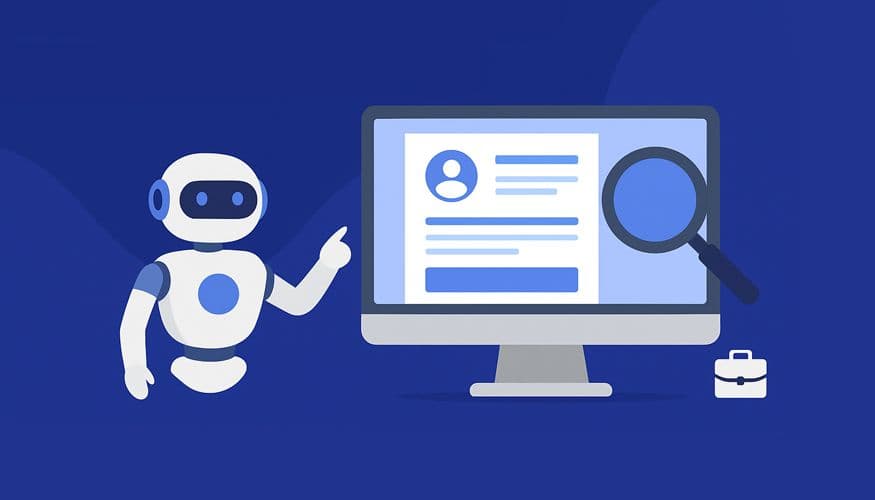
What Is Resume Screening Software?
Resume screening software is a hiring tool that automatically reviews, scores, and ranks job applications using artificial intelligence, natural language processing (NLP), and machine learning, helping recruiters build accurate shortlists in minutes instead of days.
Unlike basic keyword filters, modern AI resume screening software reads context. It understands that a "warehouse operations lead" may have exactly the skills you need for a logistics manager role, even when the titles don't match. It extracts structured data from every resume, maps it against your job description, assigns a fit score, and surfaces the candidates most likely to succeed, automatically.
The result: your team spends less time reading stacks of PDFs and more time talking to the people worth hiring.
Why Manual Screening Breaks Down at Scale
Most mid-level job postings receive 300 to 500 applications within the first 72 hours. According to SHRM's 2025 Talent Trends Report, 43% of organizations now use AI for HR tasks, up from 26% the previous year, with recruiting remaining the primary use case. The teams that have not yet made the shift are feeling the gap in speed, consistency, and candidate quality.
Here is why purely manual resume screening fails under volume:
Volume outpaces capacity
A recruiter reading 8 hours a day can realistically review 100 to 120 resumes with meaningful attention. At 400 applications, something has to give, and it is usually the quality of the evaluation.
Fatigue creates inconsistency
Research consistently shows that decision quality degrades after extended repetitive tasks. The recruiter reviewing resume 380 is not making the same quality judgment as the one reviewing resume 12. Strong candidates buried in the back half of the pile get overlooked, not because they are unqualified, but because attention ran out.
Human criteria drift
When multiple reviewers evaluate the same pool, alignment breaks down fast. One prioritizes certifications, another prefers tenure, a third focuses on employer names. The result is a shortlist shaped by reviewer preference rather than job requirements.
Slow response loses talent
Candidates who apply to multiple roles accept the first reasonable offer they receive. A two-day screening delay is often enough for a strong candidate to move on.
Automated resume screening solves all four problems simultaneously. It applies consistent criteria to every application, at scale, without fatigue, and triggers follow-up the moment a strong candidate is identified.
How AI Resume Screening Works, Step by Step
Understanding what happens inside AI-based resume screening software makes it easier to evaluate platforms, configure them well, and explain the process to hiring managers who are skeptical of automation.
Step 1: Resume Parsing
Resume parsing software extracts structured data from raw documents, whether PDF, Word, LinkedIn export, or plain text, and converts it into comparable, searchable fields: skills, job titles, years of experience, education level, certifications, and more.
Good resume parsers go well beyond format recognition. They understand synonyms ("full-stack engineer" and "software developer"), infer seniority from context clues, and flag gaps or inconsistencies worth a closer look. Every candidate feeds the same data structure, making genuine side-by-side comparison possible for the first time.
Step 2: Job Description Matching
The AI maps candidate profiles against your job description using semantic analysis, not keyword overlap. This is the defining difference between first-generation applicant tracking systems and modern AI resume screening tools.
A candidate who "managed cross-functional deployment teams for a national logistics network" may never use the phrase "project manager," but an NLP-powered matcher recognizes the functional equivalence. This kind of contextual job description matching consistently surfaces candidates that rigid keyword filters would have discarded.
Step 3: Resume Scoring & Candidate Ranking
Once matching is complete, the system assigns a fit score to each candidate based on weighted criteria: required skills, preferred experience, education level, role alignment, and any custom factors your team defines. Those scores power a candidate ranking system that surfaces the top 10 to 20% of applicants for human review.
Transparent resume scoring is critical here. Recruiters need to see why a candidate ranked where they did, which criteria contributed positively, and what was missing. That visibility builds trust in the shortlist and allows the model to be calibrated over time as your team's hiring preferences evolve.
Step 4: Automated Candidate Engagement
Strong candidates do not wait. As soon as a high-scoring applicant is identified, the system triggers personalized outreach by SMS, email, or voice, introducing the role, confirming interest, and moving toward next steps.
This is where recruitment automation separates itself from simple filtering. A candidate who applied at 9pm receives a response by 9:05pm. That speed alone produces measurable improvements in conversion rates, particularly in competitive labor markets where top candidates hold multiple offers within 48 hours of applying.
Step 5: Conversational Pre-Screening
A conversational AI assistant handles the next stage, asking role-specific pre-screening questions, verifying eligibility requirements, confirming availability, and collecting any additional context your team needs before a human interview. The recruiter receives a candidate who has already been pre-qualified, not a raw applicant who still needs 20 minutes of phone time to determine basic fit.
At Whippy, this entire sequence from application received to pre-qualified, scheduled candidate can run without any recruiter involvement for the top tier of applicants.
Three Types of Resume Screening Tools: Which One Do You Actually Need?
Not all AI resume screening software works the same way, and choosing the wrong category is one of the most common and costly mistakes recruiting teams make. Here is a clear breakdown.
Standalone Resume Screeners
These tools focus exclusively on parsing and ranking inbound applications. They integrate with your existing ATS and add an AI scoring layer on top. Setup is fast, usually a matter of days, and the learning curve is minimal.
Best for teams with an existing ATS they want to keep, lower application volumes, and limited IT resources. The tradeoff is that they do not handle follow-up, scheduling, or candidate engagement. You still need separate tools for those steps.
AI-Powered ATS Platforms
These are full applicant tracking systems with AI built in from the start, not bolted on afterward. They manage the entire pipeline: job posting, application collection, resume screening, candidate communication, interview scheduling, and reporting, all in one place.
Best for mid-size to enterprise teams that want a single system of record and are willing to invest in a more significant implementation. The main risk is vendor lock-in and a longer ramp-up period.
End-to-End AI Recruiting Platforms
These platforms go beyond the ATS and into active candidate engagement, voice-based pre-screening, shift scheduling, onboarding touchpoints, and workforce analytics. They are designed for organizations where hiring is a continuous, high-volume operation rather than a periodic event.
Best for staffing agencies, light industrial operations, healthcare networks, and any organization placing hundreds of workers per month. Whippy is built specifically for this category, combining AI resume screening, automated candidate engagement, and deep ATS integration into a single end-to-end recruiting workflow.
The right choice depends less on features and more on your operating model. A team filling five professional roles a quarter needs a different tool than a staffing agency deploying 200 warehouse workers a month.
Key Features That Actually Matter
Not all platforms deliver equally. These are the capabilities that separate genuinely useful AI screening tools from expensive keyword filters with a modern interface.
Accurate Resume Parsing
The foundation of everything else. Parsing accuracy matters most for non-standard resume formats, career changers, and candidates from industries with unconventional conventions. Before committing to any platform, test it with your actual application pool, not a curated demo set.
Semantic Job Description Matching
Look for NLP-based contextual matching, not keyword scoring. The practical test: does the platform surface a qualified candidate who never used the exact phrases from your job description? If not, it is still a keyword filter, regardless of how it is marketed.
Explainable Resume Scoring
A black-box score is a legal and operational liability. Your team needs to understand why a candidate ranked where they did, both for quality control and for compliance auditing. Skills-based matching with visible, documented scoring criteria is non-negotiable.
Bidirectional ATS Integration
Your AI resume screening software must write data back to your applicant tracking system automatically: scores, notes, next-step triggers, call logs, and candidate summaries. Read-only integrations create parallel records and double data entry. Whippy integrates bidirectionally with Bullhorn, Avionté, Crelate, TempWorks, and more, keeping your ATS as the single source of truth.
Omnichannel Candidate Engagement
The fastest screening pipeline produces zero results if follow-up is slow or generic. Platforms with built-in SMS, email, and voice outreach close the loop automatically and keep strong candidates warm between stages, particularly important in industries where a two-hour delay means losing a placement to a competitor.
Bias Reduction Controls
AI in resume screening can meaningfully reduce unconscious bias, but only when configured deliberately. Look for structured scoring criteria, demographic-blind initial filtering, and full audit trails. The goal is skills-based matching applied identically across every applicant, with documentation that proves it. To see how Whippy approaches this in practice, see our guide to unbiased hiring certification with Warden AI.
Predictive Analytics for Hiring
Reporting that identifies where candidates drop off, which sources produce the strongest hires, and which job descriptions attract the most qualified applicants transforms screening from a reactive bottleneck into a strategic advantage that compounds over time.
Recruitment Chatbots & Conversational AI
Recruitment chatbots that answer candidate questions, pre-screen applicants, and schedule interviews eliminate the most time-consuming coordination work from your team while keeping candidates informed and engaged throughout the process.
What AI Screening Gets Wrong: Common Misconceptions
Most of the frustration teams experience with AI resume screening tools comes from misunderstanding what the technology actually does, and what it does not.
Misconception 1: AI screening replaces recruiter judgment
It does not. It removes the part of recruiting that was never a good use of recruiter judgment in the first place: reading 400 resumes to find the 40 worth calling. The evaluation, relationship-building, culture assessment, and final hiring decision stay entirely with your team. AI handles volume. Humans handle judgment.
Misconception 2: Keyword matching and AI screening are the same thing
They are not, and the difference matters significantly in practice. Keyword matching looks for specific strings of text. AI resume screening understands meaning, context, and relevance. A keyword filter rejects a qualified nurse because her resume says "patient care coordination" instead of "nursing." A well-configured AI screener recognizes the equivalence and keeps her in the pool.
Misconception 3: AI screening is inherently biased
It can be, but it does not have to be. Bias in AI screening almost always traces back to biased training data or poorly designed scoring criteria, not to AI as a concept. A peer-reviewed study published on ResearchGate found that AI-based screeners achieved 85% accuracy in identifying relevant candidates through contextual matching, while also noting that systems trained on non-representative data showed elevated rejection rates for underrepresented candidates. The takeaway is not that AI is biased by nature. It is that platform configuration and training data quality determine outcomes, which is exactly why bias controls and audit trails are non-negotiable evaluation criteria.
Misconception 4: Implementation is a long, complex project
For most modern platforms, teams have core workflows running within days, not months. The complexity depends on how deeply you want to integrate with existing systems, but basic screening automation typically requires far less setup than expected.
The Real Business Impact: What the Numbers Show
Time Savings: From Hours to Minutes
Manual resume screening takes an average of 120 minutes per 100 resumes reviewed. According to a comparative study of AI vs. traditional recruitment methods, AI-powered systems reduce that to 36 minutes per 100 resumes, a 70% reduction in screening time, with 85% accuracy in identifying relevant candidates.
For Whippy customers, the impact is direct and documented. One Express Employment Professionals location reduced its recruiter workload enough to save $90,000 per year, not through headcount cuts, but by redirecting recruiter time from inbox management to placements and relationship-building.
Better Candidate Engagement at Every Stage
Response speed directly determines conversion rates. The same Express Employment owner saw a 56% increase in conversions after automating initial candidate touchpoints through Whippy. Speed and personalization, not more headcount, drove the result.
Dramatic Cost Reduction at Scale
CCS Construction Staffing evaluated more than 15 AI recruiting vendors before partnering with Whippy. After implementation, they cut applicant screening costs by 96% and are on pace to save $1.64 million per year in salary costs alone, without any reduction in hiring quality or candidate experience. A separate logistics staffing client achieved 70% faster response times with no degradation in placement outcomes.
More Consistent, Auditable Decisions
Well-configured AI screening systems achieve 85 to 90% consistency rates, compared to 60 to 70% inter-rater reliability for human reviewers operating under volume conditions, according to independent ROI analysis. Structured scoring criteria applied uniformly across every application is also auditable in a way that gut-feel screening never is, which matters both for candidate fairness and for organizational compliance.
Talent Pool Strength Compounds Over Time
Every screening cycle generates data. Which sources produce the strongest candidates? Which job description phrasing attracts more qualified applicants? Which pre-screen questions best predict 90-day retention? AI-driven insights and predictive analytics for hiring turn each cycle into an optimization loop. The process gets sharper with every role filled.
How to Choose Resume Screening Software: A 5-Step Framework
The right platform is the one that fits your actual operating model, not the one with the longest feature list or the most aggressive sales team.
Step 1: Define Your Volume and Velocity
How many applications do you receive per role, per week? A team filling three professional roles a quarter has fundamentally different needs than a staffing agency deploying 200 workers a month. High-volume resume screening requires different infrastructure than selective professional hiring. Know your numbers before you open any demo call.
Step 2: Map Your Existing Tech Stack
The best AI resume screening software is the one that connects cleanly to the systems you already use. List your ATS, HRIS, communication tools, and job boards. Prioritize platforms with native, bidirectional integrations over ones requiring middleware, manual exports, or custom development.
Step 3: Test Matching Quality, Not Just Speed
Request a real trial with an actual job description and a representative sample of applications. Measure the overlap between the platform's top-10 shortlist and what your best human recruiter would have selected independently. That gap is the most honest indicator of platform quality, and no feature sheet reveals it.
Step 4: Pressure-Test Compliance & Bias Controls
Ask vendors directly: How is the scoring model trained? What demographic data is excluded from initial filtering? Is there a complete audit trail? Are you GDPR and EEOC compliant? These are not nice-to-have questions. They are legal due diligence, and any vendor unwilling to answer them clearly is a vendor to move on from.
Step 5: Calculate Total Cost of Ownership
License costs are the smallest part of the real number. Factor in time-to-hire reduction, recruiter hours freed per week, cost per completed screening, and the revenue impact of faster placements. A platform that costs more upfront but cuts screening time by 70 to 80% is almost always the better investment when the full picture is on the table.
Feature Evaluation Scorecard
Use this framework when comparing platforms. Adjust the weight of each criterion to your operating model.
Evaluation Criteria | Why It Matters | What to Ask Vendors |
|---|---|---|
Resume parsing accuracy | Bad parsing corrupts every downstream decision | Test with non-standard formats from your actual pool |
Semantic matching depth | Determines whether qualified non-obvious candidates surface | Does it understand context, or just keywords? |
Scoring transparency | Required for recruiter trust and compliance auditing | Can you see exactly why each candidate scored as they did? |
ATS integration type | Read-only integrations create double data entry | Is data written back to the ATS automatically? |
Candidate engagement speed | Determines conversion rates in competitive markets | How quickly does outreach trigger after a candidate scores? |
Bias controls | Legal and ethical non-negotiable | What demographic data is excluded? Is there an audit trail? |
Multilingual support | Critical in diverse labor markets | Which languages are supported natively, not via translation? |
Implementation timeline | Determines time to value | When can core workflows go live after signing? |
Reporting and analytics | Enables continuous improvement across hiring cycles | What hiring metrics does the platform track over time? |
Whippy in Action: High-Volume Screening at Scale
Whippy's platform was built for the scenarios where resume screening breaks down: high volume, time pressure, and the need to maintain consistent quality across hundreds or thousands of concurrent applications.
Here is what a typical high-volume screening cycle looks like:
Job board automations trigger the moment an application arrives. There is no batch processing, no waiting for a recruiter to log in and start a review queue. Whippy's resume parsing software extracts structured data from every format and the AI scores each candidate against the job description using contextual matching, writing results directly to your ATS with scores, notes, and candidate summaries before a single recruiter has opened their laptop.
High-scoring applicants hear from you within minutes. Whippy's AI Recruiter contacts them by SMS, email, or voice, introducing the role, confirming interest, and beginning the pre-screening conversation. Candidates who applied at 11pm get a personalized response at 11:03pm.
The conversational screening AI then handles role-specific qualification questions, verifies key requirements, confirms availability, and schedules interviews, all without recruiter involvement. The full transcript logs back to your ATS automatically.
By the time a human recruiter engages, the candidate has been pre-qualified, has answered your screening questions, and has an interview slot confirmed. The recruiter's job is to evaluate and decide, not to coordinate logistics.
For teams running high-volume hiring across light industrial, healthcare, logistics, or hospitality, this model does not just save time. It fundamentally changes what is operationally possible, allowing smaller recruiting teams to manage candidate volumes that would otherwise require twice the headcount.
Advanced Applications of AI in Recruiting
AI Talent Discovery & Proactive Sourcing
Modern AI tools for recruitment extend well beyond inbound applications. AI sourcing and AI talent discovery tools scan your existing ATS, professional networks, and job boards to identify candidates who match open roles before they apply. This builds living candidate pipelines rather than starting each requisition from scratch.
Staffing Agency Workflows
For staffing agencies placing workers at scale, automated candidate screening integrates directly with shift scheduling, worker deployment, and onboarding. The AI maintains the candidate relationship through placement and beyond, reducing no-shows and improving retention through consistent touchpoints that would be impossible to sustain manually.
Conversational Pre-Screening & Behavioral Indicators
Whippy's AI Agent conducts structured voice or text-based pre-screening conversations that go beyond eligibility verification. These interactions generate data on communication clarity, role comprehension, and behavioral consistency that complement resume scoring and give recruiters meaningful context before the first human conversation.
AI Recruiting as an Operating System
The most sophisticated use of AI-powered ATS software is not automating individual tasks. It is building a recruitment operating system where every data point, application score, candidate response, source attribution, and placement outcome feeds a continuously improving model. Each hiring cycle produces better results than the last, and the advantage compounds over time.
The Bottom Line
Resume screening software has moved well past useful tool. For any team hiring at meaningful volume, it is operational infrastructure, as fundamental to the recruiting function as the ATS itself.
The teams achieving the strongest results are not using AI to replace recruiter judgment. They are using it to protect recruiter judgment, ensuring that the evaluation, relationship-building, and decision-making capacity of their best people is applied to the candidates who have earned it, rather than exhausted on a pile of resumes that never warranted human attention in the first place.
If your team is ready to stop managing volume and start hiring with focus, Whippy was built for exactly that.
Request a free demo and see the complete screening workflow built around your actual job types and hiring volume.
Related reading:
- Recruiting Process Automation for High-Volume Hiring
- How to Automate Candidate Screening
- AI Agent for Recruiting: Hire Faster
- Best AI Software for Staffing and Recruiting Firms
FAQ
Q: What is resume screening software?
A: Resume screening software is a tool that automatically reviews job applications using AI, NLP, and machine learning. It parses resumes to extract structured data, matches candidate profiles against job requirements, scores and ranks applicants by fit, and triggers automated follow-up, so recruiters review a prioritized shortlist instead of raw applications.
Q: How does AI resume screening work?
A: AI resume screening works in five steps: a resume parser extracts structured data from CVs; semantic matching compares candidate profiles against the job description using contextual analysis; a scoring model assigns fit scores based on weighted criteria; candidates are ranked by relevance; and automated engagement notifies top candidates and collects pre-screening information. The recruiter receives a pre-qualified shortlist.
Q: Is AI resume screening more accurate than manual review?
A: In high-volume environments, yes. According to peer-reviewed research published on ResearchGate, AI-based screening achieves 85% accuracy in identifying relevant candidates through contextual matching, while maintaining consistency that manual review cannot sustain at volume. Human review remains more nuanced for genuinely borderline candidates, which is why the strongest workflows use AI to filter at volume and human judgment to evaluate the resulting shortlist.
Q: Can AI resume screening reduce bias in hiring?
A: Yes, when configured deliberately. AI-based resume screening removes subjective factors from first-pass filtering by applying identical skills-based criteria to every applicant. The key is ensuring the scoring model is not trained on historically biased hiring data, which is why transparent bias controls and audit trails are non-negotiable in any credible platform.
Q: How much time can AI resume screening save?
A: First-pass screening time typically drops by 70% or more. A comparative study of AI vs. traditional recruitment methods found AI reduced screening time from 120 to 36 minutes per 100 resumes. The more operationally meaningful number is time-to-hire: automated engagement and pre-screening routinely cut days or weeks from the full process, directly improving offer acceptance rates in competitive markets.
Q: Does resume screening software work with existing ATS systems?
A: Most modern platforms integrate with major applicant tracking systems. The critical distinction is whether the integration is read-only or bidirectional. Bidirectional integration means the AI writes scores, notes, candidate summaries, and next-step triggers back to your ATS automatically, eliminating double data entry and keeping your pipeline accurate in real time. Whippy integrates bidirectionally with Bullhorn, Avionté, Crelate, TempWorks, and others.
Q: Is AI resume screening suitable for small businesses?
A: Yes, and the economics often favor smaller teams disproportionately. A small recruiting team handling 100 applications per role benefits significantly from automation because every hour saved on screening is an hour redirected toward relationship-building, offer negotiation, or filling additional roles.
Q: What industries benefit most from AI resume screening?
A: High-volume industries see the clearest and fastest ROI: staffing agencies, light industrial and logistics, healthcare, retail and hospitality, call centers, and fast-growing technology companies. Any organization consistently hiring more than 20 people per month reaches the threshold where automated resume screening delivers returns that compound over time.
Q: What is the difference between a resume parser and AI resume screening software?
A: A resume parser extracts structured data from a CV: job titles, skills, education, and employment dates. That is a component, not a complete system. AI resume screening software uses parsed data as its input, then adds semantic job description matching, candidate scoring, applicant ranking, automated engagement, and hiring analytics. Parsing organizes raw data. Screening acts on it intelligently.
Q: How do I start with automated resume screening?
A: The most practical approach: identify your highest-volume role or requisition type, run a focused pilot with a platform that integrates with your existing ATS, and measure shortlist quality against your current baseline. Most teams see meaningful results within their first full hiring cycle. Request a Whippy demo to see the complete screening workflow built around your specific volume and use case.
Table of Contents
Table of Contents
- What Is Resume Screening Software?
- Why Manual Screening Breaks Down at Scale
- How AI Resume Screening Works, Step by Step
- Three Types of Resume Screening Tools: Which One Do You Actually Need?
- Key Features That Actually Matter
- What AI Screening Gets Wrong: Common Misconceptions
- The Real Business Impact: What the Numbers Show
- How to Choose Resume Screening Software: A 5-Step Framework
- Feature Evaluation Scorecard
- Whippy in Action: High-Volume Screening at Scale
- Advanced Applications of AI in Recruiting
- The Bottom Line
- FAQ
Try Whippy for Your Team
Experience how fast, automated communication drives growth.

Related Articles
Best AI Recruiting Tools for Franchise Staffing
 Elizabeth Long
Automate Customer Support: Complete Guide to AI & Tools
Elizabeth Long
The Staffing Operating System for Avionté
Elizabeth Long
Automated License Verification for Staffing Agencies
Elizabeth Long
Write Job Descriptions That Make AI Recruiters Perform
Elizabeth Long
Business Fax Software: One Inbox for All Channels
Elizabeth Long