


Table of Contents
- What Is an AI Agent for Recruiting?
- How an AI Agent for Recruiting Works (Step by Step)
- AI Recruiting Agent Case Study: Real Results from Real Staffing Firms
- The Business Case: Metrics That Staffing Leaders Track
- Who Benefits Most from AI in Talent Acquisition
- What Makes an AI Recruiter Tool Truly "Agentic"
- Key Capabilities to Evaluate in Any AI-Driven Recruiting Platform
- Recruiting Automation Workflows You Can Launch in Days
- AI Agent for Recruiting vs. Traditional Recruiting: A Direct Comparison
- Limitations Worth Knowing
- See It in Your Pipeline
- Frequently Asked Questions
Try Whippy for Your Team
Experience how fast, automated communication drives growth.
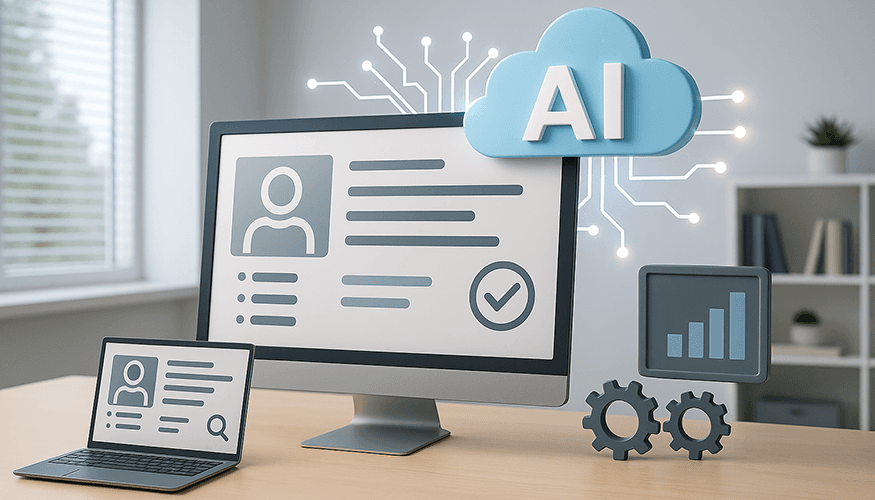
An AI agent for recruiting is software that autonomously handles candidate outreach, screening, scoring, and interview scheduling, without manual input from a recruiter. Unlike a basic recruiting chatbot that follows a fixed script, a true recruitment AI agent reads job context, adapts its questions to each role, integrates directamente with your applicant tracking system, and operates 24/7.
The result: faster hires, dramatically lower costs, and recruiters freed to focus on relationships and placements instead of data entry and follow-up.
If you're evaluating AI automation in recruitment, this guide covers everything your team needs to make an informed decision: how the technology works, which use cases deliver the strongest ROI, what to look for in an AI-driven recruiting platform, and how leading staffing firms are already using it to outpace the competition.
What Is an AI Agent for Recruiting?
An AI recruiting agent is a category of AI in talent acquisition that goes beyond simple automation. Where a rules-based system executes a predefined sequence and stops when something unexpected happens, a genuine recruitment process AI agent reasons through context.
It understands the specific requirements of each role. It applies automated candidate screening logic calibrated to your criteria. It escalates edge cases to humans when appropriate and writes every interaction, transcripts, scores, status tags, status updates, back into your ATS automatically.
The simplest way to understand the difference:
Recruiting Chatbot | AI Agent for Recruiting | |
|---|---|---|
Behavior | Follows a fixed script | Adapts to role, candidate, and context |
Scope | Answers questions | Runs the full screening workflow |
ATS Integration | Manual export | Bidirectional, automatic sync |
Availability | Business hours | 24/7, including evenings and weekends |
Compliance | Limited guardrails | Configurable restrictions + audit log |
Scalability | One conversation at a time | Thousands of conversations simultaneously |
This distinction matters for teams doing high-volume recruiting, where the difference between a chatbot and a true intelligent recruiting assistant is the difference between partial automation and a fully automated pipeline.
How an AI Agent for Recruiting Works (Step by Step)
Here is what happens from the moment a candidate applies when a modern AI hiring assistant is running:
Step 1 • Ingest the Job Requisition
The AI recruiting workflow automation system pulls pay rate, shift, location, required certifications, and skills directly from the requisition. No manual setup per role. The agent understands what "qualified" means for this specific opening before outreach begins.
Step 2 • Instant Speed-to-Lead Outreach
The candidate receives an SMS, chat message, or voice call within seconds of applying, not hours, not days. This speed to lead is the single most impactful factor in candidate response rates. The average recruiter takes three to five days to respond; an AI recruiter tool responds in under 90 seconds.
Step 3 • Conversational Screening
The conversational AI recruiter conducts role-specific screening in a natural, two-way format. Candidates respond at their convenience, evenings, weekends, between shifts. This candidate engagement automation dramatically improves the percentage of applicants who complete the process.
Step 4 • Automated Candidate Scoring and Qualification
Each candidate is scored using automated resume screening and response evaluation logic calibrated to your requirements. Experience, location, certifications, availability, and stated preferences are all weighted. Unqualified applicants don't reach recruiters. Qualified ones don't fall through the cracks.
Step 5 • Interview Scheduling
Candidate qualification automation routes qualified candidates directly into recruiter calendars or to the appropriate team member, without a single scheduling email. For teams running high-volume hiring, this step alone saves hundreds of hours per month.
Step 6 • ATS Sync
Every interaction is written back into your system of record automatically. Transcripts, scores, status updates, and notes sync to your applicant tracking system and AI layer in real time. No parallel records. No manual data entry.
The entire sequence runs without human intervention. Recruiters receive a ready-to-review shortlist. The pipeline never stalls because someone was out of office. For teams managing after-hours recruiting, this 24/7 coverage fundamentally changes the economics of the operation.
AI Recruiting Agent Case Study: Real Results from Real Staffing Firms
The business case for staffing automation isn't theoretical. These results come directly from firms that deployed an AI recruiting agent for staffing in active pipelines:
CCS Staffing:
$1.64M in Annual Cost Reduction
By replacing manual outreach and follow-up with a recruitment AI workflow, CCS Staffing reduced annual recruiting costs by $1.64 million. The efficiency came from eliminating repetitive work across hundreds of simultaneous requisitions, work that previously required proportional headcount.
Link Staffing:
95% Reduction in Interview Coordination Costs
Recruiting automation for staffing cut Link Staffing's interview coordination costs by 95% while maintaining candidate engagement quality. Recruiters didn't do less work, they did more valuable work. Coordination became infrastructure. Relationships became the focus.
National Staffing Firm:
70% Faster Response Times
One firm using AI hiring automation achieved 70% faster response times without any reduction in quality-of-hire metrics. Speed didn't come at the cost of fit. It came from removing the bottleneck of manual, sequential processing.
These are not edge cases. They represent what happens when the repetitive volume work is handled by software purpose-built for it, and when recruiters are freed to do what only humans can do.
The Business Case: Metrics That Staffing Leaders Track
Hiring process efficiency is measurable. These are the numbers that move when AI in recruitment is deployed correctly:

Speed to Lead Drops from Days to Seconds. First contact within 90 seconds consistently outperforms industry averages. In markets where top candidates evaluate multiple offers simultaneously, the firm that reaches out first and qualifies fastest wins the placement. This is the most direct AI recruiting benefit teams report.
Screen-to-Interview Conversion Improves AI for resume screening and automated candidate screening apply consistent criteria at every application. Qualified candidates don't fall through the cracks because someone was busy. Unqualified candidates don't consume recruiter time because the screening was inconsistent.
Time-to-Hire Compresses Significantly Removing back-and-forth scheduling, manual data entry, and delayed follow-up cuts hiring cycles materially. Teams that track reduce time-to-hire as a KPI consistently report improvement within the first 30 days of deployment.
Requisitions Filled Per Recruiter Increases Each recruiter can carry more roles when an AI recruiter assistant handles outreach and screening across all of them simultaneously. Recruiter productivity scales without proportional headcount growth, a structural advantage that compounds over time.
Candidate Response Rates Improve Speed plus tone drive engagement. An AI hiring assistant that reaches candidates immediately, in their preferred language, in a conversational format, consistently achieves higher response rates than delayed, form-like outreach. Firms using multilingual recruiting AI in diverse labor markets report particularly strong improvements.
Who Benefits Most from AI in Talent Acquisition
The strongest ROI tends to appear in specific operating models. An AI recruiting agent for staffing firms delivers the most impact when:
High-Volume Hiring Is the Core Business
Light industrial, logistics, healthcare, hospitality, and seasonal staffing all involve hundreds of active applicants across dozens of open roles at any given time. AI for high-volume hiring scales without degrading response quality. See how this works end-to-end in our guide to recruiting process automation for high-volume hiring.
Operations Are Distributed Across Branches or Franchises
An AI recruiting agent for staffing firms standardizes communication tone, screening criteria, and compliance posture across every location, something that is nearly impossible to maintain manually at scale. Teams in this situation will find the breakdown of AI recruiting tools for franchise staffing firms directly relevant.
Response Time Is a Competitive Differentiator
In markets where candidates are evaluating multiple offers simultaneously, the firm that reaches out first and qualifies fastest wins the placement. An AI recruiter for staffing firms that achieves sub-90-second response times gains a structural advantage that manual processes cannot match.
Talent Pools Are an Underutilized Asset
Most ATS databases are full of previously screened, partially qualified candidates who went dark. AI for candidate sourcing reactivates those silver medalists automatically when new matching roles open, turning a static database into a live pipeline.
What Makes an AI Recruiter Tool Truly "Agentic"
Most recruiting workflow automation is rules-based. It executes a predefined sequence and stops when something unexpected happens.
A genuinely agentic AI recruiter operates differently. It reads the context of each interaction, the requisition type, the candidate's responses, the compliance requirements for that role, and adapts its behavior accordingly. It escalates when it should. It filters sensitive data without being told. It updates your ATS with notes and status changes as part of its normal operation.
The distinction matters for compliance. A configurable AI recruiter built with human-in-the-loop review keeps a recruiter informed and in control without requiring them to do the work. That architecture is how AI-powered recruiting maintains accuracy at volume while staying within your firm's policies.
Whippy's platform is built on this model and carries SOC 2 Type II certification, and has earned unbiased hiring certification from Warden AI, a meaningful bar for staffing firms that handle sensitive candidate data across regulated industries.
Key Capabilities to Evaluate in Any AI-Driven Recruiting Platform
When assessing AI talent acquisition tools, these capabilities separate functional tools from genuinely useful ones:
Multilingual Recruiting AI
A multilingual recruiting AI reaches candidates in their preferred language automatically. For staffing firms operating in diverse labor markets, this is not optional, it is the difference between a 30% response rate and a 60% one.
Custom AI Recruiting Workflows
Your firm's screening criteria, scoring models, and escalation logic are not generic. A platform that only supports fixed templates will require workarounds from day one. Look for custom AI recruiting workflows that can be configured to your process without engineering resources.
ATS and AI Integration
The ATS and AI integration must be bidirectional, not just a one-way data push. Bullhorn, Avionté, Crelate, and similar platforms are common integration targets. Every interaction should sync automatically. No parallel records. No manual reconciliation. ATS recruiting automation that requires human intervention to stay in sync defeats its own purpose.
Candidate Engagement Automation
Qualified candidates who do not hear back within hours disengage. Candidate engagement automation handles follow-up sequences, availability checks, and re-engagement for candidates who go quiet, keeping the pipeline warm without recruiter effort.
Compliant AI Recruiting Controls
Compliant AI recruiting means the system restricts unauthorized topics, maintains auditable logs, and enforces your data handling policies in every conversation. This is particularly important for clients in healthcare, finance, and government contracting.
Recruiting Automation Workflows You Can Launch in Days
One underappreciated advantage of modern talent acquisition automation is deployment speed. Most of these recruitment automation workflows are live within days, not months:
Speed-to-Lead and Screening
New applicant enters the ATS, immediate outreach, role-specific screening questions, scoring, handoff to recruiter. This workflow alone eliminates the most common cause of candidate drop-off: the gap between application and first contact.
Silver Medalist Reactivation
When a new role opens, the AI talent acquisition tool identifies past candidates who match, verifies their current interest, updates their status, and books a call. What previously required days of manual outreach runs overnight. This is one of the highest-ROI applications of AI for candidate sourcing because the candidates are already partially qualified.
Shift and Location Matching
For multi-site operations, the AI recruiting agent for staffing firms confirms candidate availability, location preferences, and shift compatibility before any recruiter time is spent. Show rates improve and mismatches decrease. Staffing agency AI that handles this pre-qualification step consistently reduces wasted interview slots.
After-Hours Coverage
Candidates apply at 9pm. The recruitment AI agent responds at 9pm. Firms running after-hours recruiting automation capture a segment of applicants that manual processes consistently miss, particularly important for industries like logistics and healthcare where applicants have non-standard schedules.
AI Agent for Recruiting vs. Traditional Recruiting: A Direct Comparison
Metric | Traditional Recruiting | AI Agent for Recruiting |
|---|---|---|
First response time | 3 to 5 days average | Under 90 seconds |
Availability | Business hours | 24/7/365 |
Screening consistency | Varies by recruiter | Uniform, criteria-based |
Volume capacity | Limited by headcount | Unlimited, simultaneous |
ATS data quality | Manual, error-prone | Automated, real-time |
Cost per screen | High (recruiter time) | Low (software) |
Candidate experience | Inconsistent | Consistent, fast, conversational |
Compliance documentation | Manual, incomplete | Automated audit log |
Limitations Worth Knowing
AI automation in recruitment handles volume well. It handles consistency well. It handles speed exceptionally well.
It does not replace the judgment calls that experienced recruiters make: reading a candidate's enthusiasm in a live conversation, navigating a difficult client requirement, or closing a placement where relationship trust is the deciding factor.
The right framing is this: the AI recruiting agent handles everything up to the moment where human judgment adds clear value. Recruiters get to spend more of their time doing the part of the job that actually requires them.
Teams that treat the agent as a replacement for recruiters tend to underinvest in recruiter development. Teams that treat it as infrastructure for recruiters tend to see the strongest results.
See It in Your Pipeline
The firms that move on AI hiring automation first gain a structural advantage that compounds. Faster response times mean better candidates. Better candidates mean stronger placements. Stronger placements mean better client relationships.
Whippy's AI recruiting agent runs inside your existing ATS. Setup is measured in days, not months.
Book a free live demo ↗
Frequently Asked Questions
Q: What is an AI recruiting agent and how is it different from a chatbot?
A: A recruiting chatbot answers questions from a fixed script. An AI recruiting agent runs the full screening and qualification workflow autonomously, asking questions, evaluating responses, scoring candidates, scheduling interviews, and updating the ATS, without a script or manual oversight for each interaction.
Q: How does AI automation in recruitment improve response rates?
A: Two factors drive improvement: speed and tone. Candidates receive outreach within seconds of applying, at any hour. Conversational AI recruiter messaging feels natural rather than form-like. Both factors measurably increase the percentage of candidates who engage and complete the screening process.
Q: Can an AI agent handle high-volume hiring at scale?
A: Yes. AI for high-volume hiring is the primary use case. The agent processes every applicant simultaneously, applies consistent criteria, and surfaces only qualified candidates to recruiters, regardless of application volume.
Q: How does an AI recruiting agent integrate with my existing ATS?
A: Whippy integrates directly with major ATS platforms including Bullhorn, Avionté, and Crelate. Candidate data, screening transcripts, scores, and status updates sync automatically. No parallel system required.
Q: What does compliant AI recruiting look like in practice?
A: Built-in guardrails restrict unauthorized conversation topics, redact sensitive data categories, and maintain a full audit log of every interaction. Whippy's SOC 2 Type II certification covers the platform's data handling practices.
Q: How long does it take to get started?
A: Most staffing teams have core recruiting workflow automation running within days. The platform is designed for recruiter configuration, no engineering resources required for standard deployments.
Q: What does an AI recruiting agent NOT replace?
A: It does not replace experienced recruiter judgment for complex placements, relationship-driven business development, or nuanced candidate conversations that require genuine human connection. The strongest AI talent acquisition tools are built to augment recruiters, not replace them.
Q: When is an AI recruiting agent NOT the right fit?
A: If your firm handles very low applicant volume, highly specialized roles that require extensive human judgment at first contact, or clients with unusual compliance requirements not yet supported by the platform, the ROI case is weaker. It is worth discussing your specific setup before committing.
Table of Contents
Table of Contents
- What Is an AI Agent for Recruiting?
- How an AI Agent for Recruiting Works (Step by Step)
- AI Recruiting Agent Case Study: Real Results from Real Staffing Firms
- The Business Case: Metrics That Staffing Leaders Track
- Who Benefits Most from AI in Talent Acquisition
- What Makes an AI Recruiter Tool Truly "Agentic"
- Key Capabilities to Evaluate in Any AI-Driven Recruiting Platform
- Recruiting Automation Workflows You Can Launch in Days
- AI Agent for Recruiting vs. Traditional Recruiting: A Direct Comparison
- Limitations Worth Knowing
- See It in Your Pipeline
- Frequently Asked Questions
Try Whippy for Your Team
Experience how fast, automated communication drives growth.

Related Articles
Best AI Recruiting Tools for Franchise Staffing
 Elizabeth Long
AI Call Center Solutions: The Complete Guide
Elizabeth Long
The Staffing Operating System for Avionté
Elizabeth Long
Automated License Verification for Staffing Agencies
Elizabeth Long
Write Job Descriptions That Make AI Recruiters Perform
Elizabeth Long
Whippy AI Recruiter: Independent Bias Audit Results
Elizabeth Long