


Table of Contents
- Why Voice AI Is Becoming Essential in Health Insurance Call Centers
- What "Leading" Actually Means in This Category
- How to Evaluate a Voice AI Platform
- Core Capabilities to Look For
- AI Voice Agents vs. Traditional Call Centers
- Insurance-Specific Use Cases That Drive Real ROI
- A Practical Rollout Plan
- What Whippy Offers for Health Insurance Call Centers
- Common Mistakes to Avoid
- See It in Practice
- Frequently Asked Questions
Try Whippy for Your Team
Experience how fast, automated communication drives growth.
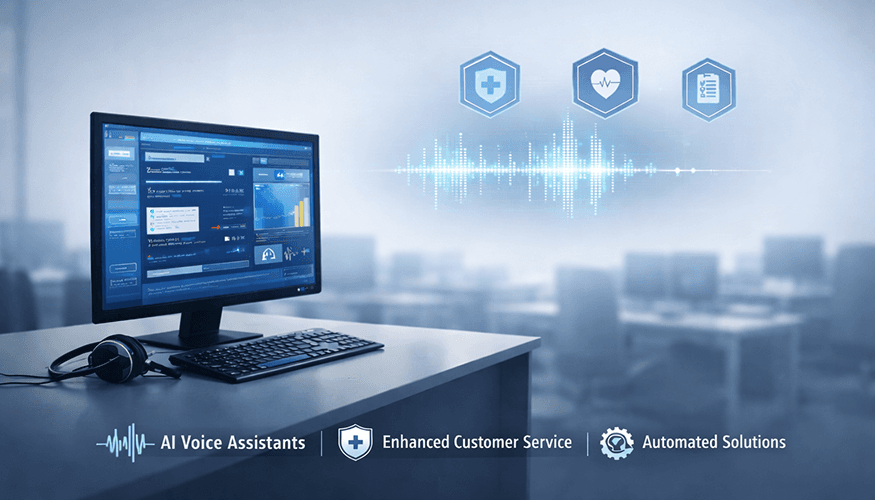
Health insurance call centers run on pressure. Members expect fast answers, agents handle high call volumes and emotionally charged conversations, and during open enrollment even a fully staffed team falls behind. The leading voice AI platforms for health insurance call centers solve this by automating routine inbound and outbound calls such as benefits questions, claims status, and eligibility checks, while routing anything complex or sensitive straight to a live agent. The best platforms, including Whippy's Voice AI, combine accurate speech recognition, low latency, built-in call recording and transcription, and real integrations with the CRM or case management systems your team already uses.
This guide breaks down what actually separates a strong platform from a demo that falls apart in production, how to evaluate vendors, and what a safe rollout looks like in practice.
Why Voice AI Is Becoming Essential in Health Insurance Call Centers
Health insurance member services carries more weight than typical customer support. People call when they are confused, stressed, or financially affected by a decision. At the same time, most of that volume falls into a short list of repeatable categories: benefits and coverage questions, eligibility confirmations, claims status updates, provider search, billing questions, plan changes, and renewal support.
Two operational patterns make voice AI urgent rather than optional:
Spikes are predictable. Staffing isn't |
|---|
Open enrollment, billing cycles, and plan changes create surges that overwhelm queues and drive up abandonment, no matter how well a team plans headcount around them. |
Missed calls create more calls |
|---|
A voicemail or an after-hours gap does not remove the need, it just delays it and adds a repeat call the next day. Covering the most common intents 24/7 closes that leak before it compounds. |
What "Leading" Actually Means in This Category
The market is full of AI vendors that sound similar in a sales demo. A platform earns the label "leading" only when it holds up across the full lifecycle of a call, not just the first thirty seconds of a pitch. That means:

Accurate speech recognition and natural language understanding for insurance-specific terminology
Low latency, so the conversation feels human instead of laggy
Reliable escalation to a live agent when a request is complex, urgent, or outside its scope
Clear reporting on containment, escalation, and call outcomes
Compliance readiness for insurance and healthcare-adjacent workflows
Real integrations into the CRM, case management, or EHR systems already in use
Stability at peak volume, without new SLA gaps appearing under load
A platform that checks these boxes functions as an operational layer of the contact center. One that does not tends to look impressive in a demo and then quietly gets abandoned three months into a rollout.
How to Evaluate a Voice AI Platform
Score each vendor from 1 to 5 across the criteria that actually predict whether a program survives contact with real call volume:
EVALUATION CRITERIA | WHAT TO TEST |
|---|---|
Conversation quality | Accuracy with accents, background noise, and insurance terminology |
Latency and stability | Response time under normal load and during peak traffic |
Containment vs. escalation | How often the AI resolves the call versus hands it off |
Compliance posture | Recording disclosures, access controls, audit trail quality |
Monitoring and QA | Dashboards, transcript review, and outcome tracking |
Integration depth | Real connection to CRM, case systems, and reporting, not just an API doc |
Deployment speed | Time from contract to a working pilot |
Cost predictability | Pricing structure and realistic ROI based on cost per call |
This structure avoids the most common mistake in vendor selection: picking a platform based on how natural it sounds in a demo call, rather than how it performs against your actual intent mix.
Core Capabilities to Look For
Speech recognition and conversation quality
If the system cannot reliably understand real members in real conditions, accents, background noise, fast speech, every other feature becomes irrelevant. Members will ask for a human agent immediately.
Natural language understanding (NLU)
The platform needs to detect intent and entities accurately, using natural language processing (NLP) to interpret what a member is actually asking, and it needs to handle its own mistakes gracefully. A strong system asks a clarifying question when it mishears something instead of guessing or failing silently.
Low latency
Even an accurate system feels broken if it responds too slowly. Delayed responses are one of the most common reasons a pilot fails, since members assume something is wrong even when the underlying answer is correct. Because latency can come from several places in a voice pipeline, ask any vendor whether they measure it at each stage of the call, not just as a single overall number, so problems can be isolated and fixed rather than guessed at.
Smart escalation and intent-based routing
The platform should behave like a triage layer, not just an answer engine. It needs defined rules for when to hand off immediately: identity mismatches, ambiguous coverage questions, appeals or grievances, complex billing disputes, and any signal of emotional distress or urgent medical need. The best pattern is a warm handoff, where the agent receives a summary and context so the member never has to repeat themselves.
Call recording and transcription
In a health insurance setting, auditability is not optional. Recordings, transcripts, and structured summaries support compliance reviews and give a QA team the material to improve intents and scripts over time.
Text-to-speech quality
How the assistant sounds matters as much as what it says. Natural pacing, tone control, and a consistent voice across intents are what keep a call from feeling robotic, especially for older members or anyone already stressed about the reason for the call.
Monitoring and analytics
Containment rate, escalation rate and reasons, abandonment reduction, average handle time, repeat call rate, and sentiment analysis trends are the metrics that tell you whether a program is working or just running.
Integrations that reduce work rather than create it
A platform that cannot log outcomes into the CRM or case system your team already uses becomes a silo. Before committing, ask for a real example of an event log or a case update triggered by a call, not a slide describing the capability.
Compliance readiness
Health insurance teams frequently ask whether a vendor offers a HIPAA compliant voice AI setup. Whippy is HIPAA compliant, meeting the privacy and security standards required to work with protected health information, supports a Business Associate Agreement for organizations that need one, and operates under SOC 2 Type II compliance as well. Beyond certifications, a platform still needs clear disclaimers, data retention controls, role-based access to recordings and transcripts, and audit logs that hold up under review, standards worth confirming with any vendor before a contract is signed.
Reliability under load
High uptime, a clear failover process, and a defined response SLA for high-severity incidents matter more than any single feature once a program is live at scale.
AI Voice Agents vs. Traditional Call Centers
A few years ago, automation in call centers meant rigid phone trees and frustrating transfers. The shift with voice AI is conversational, not just faster menus.
Traditional IVR: the caller navigates a menu, lands in the wrong queue, gets transferred, and repeats their information from the start.
Voice AI: the caller says "I'm calling about my claim status," the system verifies identity, captures the claim reference, and either answers directly or escalates with a full summary attached.
The more accurate way to frame this shift is conversational routing that improves on IVR, rather than a straight IVR replacement or a wholesale substitute for human agents. The goal is not 100 percent automation. It is safe automation with a clean handoff for anything the system should not attempt alone.
Insurance-Specific Use Cases That Drive Real ROI
The programs that work start with insurance-specific workflows rather than generic call automation:
Claims intake and status. A well-built voice AI workflow verifies identity at a basic level, captures the reason for the call and a claim reference if available, asks structured intake questions, and either provides a status update or escalates with a summary attached to the case.
Billing and payments. The system can answer questions about due dates and payment options, route to a billing specialist, and send a secure payment link by text rather than handling sensitive payment details over voice.
Plan changes and renewals. Members can request documentation, understand policy updates and timelines, or get routed correctly during enrollment periods, without waiting on hold for a question that does not require a licensed agent.
Provider search. Capturing a location and specialty need, and either answering directly or sending a follow-up link, resolves one of the most common and lowest-complexity call types without human involvement.
Appointment scheduling automation. Many support lines handle callbacks, service coordination, or follow-up appointments rather than provider visits. Automating that scheduling, including reminders, reduces no-shows and frees agents from logistics that do not require a licensed conversation.
After-hours triage. Answering key questions, capturing case details, and routing anything urgent closes the gap that voicemail leaves open. For a broader look at how this applies specifically to insurance agencies rather than health plans, see this guide to 24/7 insurance answering service with AI.
A Practical Rollout Plan
Step 1: Start with your top call reasons. Pull 30 to 90 days of call reason data and identify the highest-volume, lowest-complexity, most repetitive categories. Those are the first automations.
Step 2: Define the containment boundary. Decide explicitly what the system should handle end to end and what it should route. The target is not full automation, it is a clean, well-documented handoff.
Step 3: Test latency under real conditions, not just accuracy in a quiet demo room. Response time during peak traffic should be part of the scoring criteria, not an afterthought.
Step 4: Confirm compliance requirements early. Recording policies, access control, data handling, and disclosure language should be settled with legal and compliance stakeholders before the pilot, not after.
Step 5: Validate integrations before signing. Ask for a real CRM or case system event log triggered by a call, and confirm data export and reporting access work the way the sales deck describes.
A short, focused pilot, roughly two weeks, automating two or three intents with clear escalation rules, reviewing 50 to 100 transcripts with QA, is enough to produce real evidence before a wider rollout.
What Whippy Offers for Health Insurance Call Centers
Whippy's Voice AI handles both inbound and outbound calls, supports more than 50 languages, and runs 24/7, so coverage does not depend on shift schedules. The platform is HIPAA compliant, meeting the standards required to handle protected health information securely, and tracks latency at each stage of a call, from speech recognition to the language model to the voice response, so performance issues can be diagnosed at the source rather than guessed at. Every call is recorded, transcribed, and summarized automatically, with sentiment signals surfaced to flag interactions that may need review or escalation. Teams typically see meaningful cost reduction compared to staffing the same call volume manually, since a single AI agent can handle call velocity that would otherwise require a much larger team.
Because health insurance rarely runs on voice alone, Whippy pairs this with omnichannel follow-up, so a call can trigger a text confirmation or a follow-up message without switching systems, following the same SMS deliverability and automation practices that apply to insurance messaging more broadly. On the infrastructure side, the platform connects to the CRM, case management, and reporting tools agencies already use through Whippy's integrations, and for teams also modernizing their core phone infrastructure, this pairs naturally with a broader VoIP setup for insurance companies and intelligent call routing built around the same call data.
A common scenario is after-hours claims intake: a member describes the issue in plain language, the system gathers structured details, the call is summarized and logged for the next available team, and anything urgent escalates immediately rather than sitting in a voicemail queue overnight.
For teams comparing this against the rest of their support stack, this overview of AI call center solutions covers how voice AI fits alongside chat, email, and messaging channels, and this guide to AI software for insurance agencies covers how voice AI fits into a wider evaluation of tools for the industry.
Common Mistakes to Avoid
Choosing a generic voice AI platform. Tools built for simple FAQs tend to fail once they meet complex intent routing, insurance-specific language, and real compliance requirements.
Treating healthcare and insurance as the same workflow. They are adjacent, not identical. A vendor optimized for general healthcare customer support can still be weak on claims routing and member services specifics.
Automating without guardrails. Letting a system attempt complex calls with no safe escalation path is the fastest way to lose member trust.
Skipping ongoing monitoring. Without regular call review and analytics, performance drifts quietly. The programs that scale well treat QA as continuous, not a one-time setup step.
Not preparing agents for the handoff. A program works when agents trust the summaries they receive and know how to flag failures so the system improves over time.
See It in Practice
The platforms that lead this category do not win because they sound impressive in a fifteen-minute demo. They win because they reduce wait times, keep the member experience consistent, support claims intake at scale, and connect every interaction back to the systems a team already relies on.
Request a demo to see how Whippy's Voice AI handles real health insurance call center workflows, from after-hours claims intake to renewal season volume.
Frequently Asked Questions
Q: What are the leading voice AI platforms for health insurance call centers?
A: The leading platforms combine accurate speech recognition, low latency, reliable escalation to a live agent, and real integrations with the CRM or case management systems a health insurance team already uses. They handle routine calls such as benefits questions, claims status, and eligibility checks automatically, while routing anything complex or sensitive to a person.
Q: Can voice AI replace a member services team?
A: No. The strongest programs use AI for repetitive, low-risk interactions and route complex or sensitive cases to a live agent. The value comes from coverage and consistency, not full replacement.
Q: What calls should be automated first?
A: Start with the highest-volume, lowest-complexity categories: benefits questions, claim status checks, documentation requests, and basic routing. Expand into claims intake and outbound follow-ups once those are stable.
Q: Is voice AI HIPAA compliant for health insurance calls?
A: It depends on the vendor. Whippy's Voice AI is HIPAA compliant and supports a Business Associate Agreement, which is what most health insurance organizations require before handling calls that touch protected health information. Always confirm this directly rather than assuming it, since not every voice AI platform meets this standard.
Q: How much does voice AI cost for a health insurance call center?
A: Pricing typically scales with call volume and the number of automated workflows. Whippy's Voice AI starts at $500 per month, with cost usually compared against the expense of staffing the same call volume manually rather than as a flat fee.
Q: Can voice AI reduce abandonment rate?
A: Yes. Faster time to answer, 24/7 coverage, and more accurate routing all reduce abandonment and repeat calls, especially during high-volume periods like open enrollment.
Q: What KPIs should a health insurance call center track for voice AI?
A: Containment rate, escalation rate and reasons, time to answer, repeat call rate, sentiment trends, and cost per call compared to a fully manual process are the metrics that show whether a program is actually working.
Table of Contents
Table of Contents
- Why Voice AI Is Becoming Essential in Health Insurance Call Centers
- What "Leading" Actually Means in This Category
- How to Evaluate a Voice AI Platform
- Core Capabilities to Look For
- AI Voice Agents vs. Traditional Call Centers
- Insurance-Specific Use Cases That Drive Real ROI
- A Practical Rollout Plan
- What Whippy Offers for Health Insurance Call Centers
- Common Mistakes to Avoid
- See It in Practice
- Frequently Asked Questions
Try Whippy for Your Team
Experience how fast, automated communication drives growth.

Related Articles
EU AI Act: Whippy's Independent Bias Audit
 Elizabeth Long
Colorado SB 26-189: Whippy's Independent Bias Audit
Elizabeth Long
NYC Local Law 144: Whippy's Independent Bias Audit
Elizabeth Long
California FEHA: Whippy's Independent Bias Audit
Elizabeth Long
Illinois HB 3773: Whippy's Independent Bias Audit
Elizabeth Long
Best AI Recruiting Tools for Franchise Staffing
Elizabeth Long