


Table of Contents
- Why Secure Messaging Is Critical for Healthcare
- Essential Communication Channels in Healthcare
- Internal Communication Tools
- What Makes a Strong Healthcare Messaging Platform?
- Best Practices for Secure Healthcare Messaging
- How Whippy AI Leads in Secure Messaging
- Upgrade to Secure, Smart Communication
- FAQs about Secure Healthcare Communication
Try Whippy for Your Team
Experience how fast, automated communication drives growth.
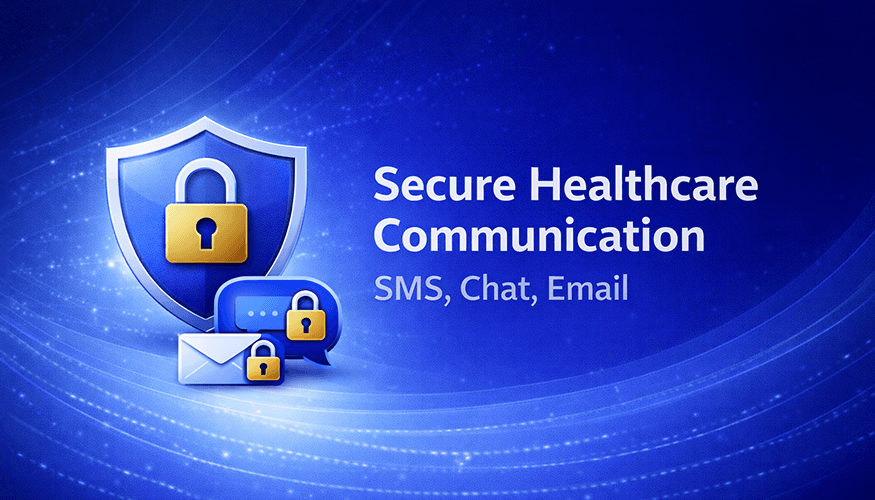
Healthcare communication is evolving quickly, driven by the demand for better access, efficiency, and safety. But with increasing cyber threats and regulatory scrutiny, secure patient communication has become essential. Whether it's a quick secure text message, a patient follow-up email, or real-time team chat, healthcare providers need tools that are both user-friendly and fully HIPAA-compliant.
This guide explores why secure healthcare communication matters, how to comply with privacy laws, and which platforms can enhance patient trust, team collaboration, and clinical efficiency. If you're looking to modernize communication while protecting sensitive patient information, you're in the right place.
Quick answer: What is secure healthcare communication?
Secure healthcare communication means sending patient and clinical messages through a HIPAA-compliant messaging platform that protects PHI with encryption, access controls, and audit logs. In practice, it includes HIPAA-compliant texting, secure email, and clinical team chat designed to prevent unauthorized access.
Why Secure Messaging Is Critical for Healthcare
Secure messaging reduces privacy risk while helping teams communicate faster across patient and clinical workflows.
1. Patient Privacy and Data Protection
Healthcare data is a prime target for hackers. Strong healthcare data security starts with secure messaging solutions that ensure data is encrypted and accessible only to authorized users. This includes messages sent through SMS, chat apps, and email platforms. It is essential that strong data security practices are implemented across all communication touchpoints to support data breach prevention.
By investing in HIPAA-compliant messaging, organizations can protect patient identities, diagnoses, treatment plans, and payment information. Encryption and access control measures keep information safe whether it's being shared across departments or with patients directly.
2. Legal and Financial Risk Avoidance
The Health Insurance Portability and Accountability Act (HIPAA) sets strict rules on how healthcare providers handle patient information and is a core standard for patient privacy. Violations can result in hefty fines, lawsuits, and reputational damage.
Using a secure messaging solution that complies with the Health Insurance Portability and Accountability Act (HIPAA) supports regulatory compliance and helps protect your organization. Make sure all vendors handling PHI have signed Business Associate Agreements (BAAs) and offer proper audit trails.
HIPAA-compliant messaging checklist (must-haves):
- A signed Business Associate Agreement (BAA) with your vendor
- Encryption in transit and at rest
- Role-based access controls and secure logins (MFA recommended)
- Audit logs for messages and user activity
- User provisioning and fast offboarding when staff leave
- Retention policies that match your compliance workflow
3. Building Patient Trust
When you use secure patient communication methods, patient engagement improves because people are more likely to respond and follow through. This can boost satisfaction, outcomes, and retention.
Patients feel safer communicating with providers who use encrypted SMS, secure email, protected portals, and secure messaging tools built for healthcare.
Essential Communication Channels in Healthcare
Most organizations use a mix of patient outreach and clinical team messaging to support speed, clarity, and privacy.
SMS: Simplicity and Reach
Pros: Instant delivery, high open rates, easy for patients to use.
Cons: Standard SMS is not secure for PHI; use HIPAA-compliant text messaging with a service that offers a BAA, access controls, and audit logs.
Use Cases: Appointment reminders, quick check-ins, wellness alerts.
How to use SMS safely in healthcare:
- Avoid including diagnoses, test results, or detailed treatment information in plain text
- Use secure links to a protected portal when messages need PHI
- Document patient consent for texting and include opt-out language when required
- Confirm identity for sensitive conversations using your approved workflow
Secure Chat Applications
Pros: Enables real-time team collaboration using clinical communication tools and secure messaging for doctors.
Cons: Not all are HIPAA-compliant out of the box.
Use Cases: Shift coordination, internal consults, administrative alerts, and staff collaboration across departments.
Secure Email for Healthcare Providers
Pros: Good for longer messages, patient instructions, or lab results.
Cons: Email must be encrypted and access-controlled to reduce the risk of unauthorized access. If you are choosing between channels, see our guide comparing HIPAA email rules vs SMS for compliance.
Use Cases: Reports, discharge summaries, insurance updates.
Telehealth Messaging Software
Pros: Combines video, voice, and messaging for remote care.
Cons: Requires setup, training, and reliable internet.
Use Cases: Remote consultations, chronic care management, digital triage.
EHR-Based Messaging
Pros: Seamless communication within patient records.
Cons: Depends on your EHR’s built-in functionality.
Use Cases: Sharing test results, medication info, or visit summaries using secure EHR messaging.
Internal Communication Tools
Hospitals and large practices benefit from secure internal communication for hospitals using dedicated medical communication apps or secure communication apps for healthcare teams. These tools allow departments to stay synced while maintaining data privacy. These platforms are vital for healthcare professionals who need to collaborate efficiently and securely.
What Makes a Strong Healthcare Messaging Platform?
When evaluating a platform used for SMS, email, and chat, look for the capabilities below. These are common baseline requirements teams expect from HIPAA compliance software that supports clinical communication:

Security: End-to-end encryption, access control, secure login.
Compliance: Designed to support HIPAA compliance with BAA support, audit trails, and administrative controls aligned to healthcare privacy requirements.
Ease of Use: Simple interface across web and mobile.
Integration: Syncs with your EHR and workflow.
Automation: Supports reminders, surveys, and follow-ups.
Platforms should also support secure patient communication, mobile optimization, and multi-channel delivery (SMS, email, chat). A robust healthcare communication platform should also enable quick deployment and seamless onboarding.
Best Practices for Secure Healthcare Messaging
Use Secure Text Messaging for Quick Outreach
Send appointment reminders, prescription notices, or follow-up instructions via secure text messaging. Front desk and scheduling teams often rely on secure texting for healthcare providers because it is fast, familiar to patients, and easy to automate.
Communicate Internally with a Clinical Communication App
Use clinical communication and collaboration (CC&C) tools to streamline care coordination between doctors, nurses, and admin staff. It reduces delays, miscommunication, and redundant tasks.
Keep Emails Encrypted and Professional
Ensure you're using secure email for healthcare providers to communicate test results, billing info, and patient updates.
Choose Software Built for Privacy
Invest in privacy-focused patient communication software that prioritizes security without sacrificing ease of use. Look for vendor transparency and a track record of compliance.
Audit and Train Regularly
Conduct regular audits and provide training for staff to reinforce best practices in secure messaging, device use, and phishing prevention.
Note: This guide is for informational purposes and is not legal advice. Your compliance team should confirm requirements for your workflows.
How Whippy AI Leads in Secure Messaging
Whippy AI is built for modern healthcare. It's not just a messaging platform, it's a complete secure messaging solution. Here's why top providers trust it:
End-to-End Encryption: From patient texts to internal messages, communication is protected with encryption and access controls to reduce unauthorized access.
Multi-Channel Support: SMS, email, chat, and even telehealth messaging software.
Automation: Streamline outreach with appointment reminders, follow-ups, and wellness tips. For pharmacies, Whippy’s Voice AI solutions offer an added layer of intelligent communication for prescription refills, notifications, and more.
EHR Integration: Syncs with your systems to simplify care team workflows.
Communication Platform: Functions as a central hub, making it easy for healthcare professionals to manage secure, compliant conversations at scale.
Whippy AI enables secure communication for healthcare teams, improves patient satisfaction, and supports HIPAA-aligned workflows with the controls needed to protect PHI.
Upgrade to Secure, Smart Communication
Healthcare is about trust, safety, and connection, and secure patient interactions are part of delivering all three. Providers need secure tools that make communication simple and reliable. From secure patient communication to encrypted internal chats, choosing the right tools can strengthen healthcare operations and improve day-to-day performance.
Whippy AI offers a powerful, scalable, and easy-to-use solution that protects your practice while keeping patients engaged. As a trusted healthcare communication platform, Whippy helps protect patient data while giving teams an efficient way to communicate at scale.
FAQs about Secure Healthcare Communication
These answers cover secure healthcare communication across SMS, email, and team chat, with practical considerations for protecting PHI.
Q: What does secure healthcare communication mean?
A: It means communicating with patients and care teams using protected channels that reduce the risk of unauthorized access to PHI. This typically includes encryption, access controls, audit logs, and policies that support HIPAA-aligned workflows.
Q: What counts as PHI in texts, emails, and chat messages?
A: PHI can include names tied to care, appointment details linked to a patient, diagnoses, medications, lab results, insurance information, and anything that connects a person to their health condition or treatment.
Q: Is standard SMS HIPAA compliant?
A: Standard SMS is not designed to protect PHI. If texting may involve PHI, many organizations use a HIPAA-compliant messaging platform with a signed BAA, administrative controls, and audit logging.
Q: What types of messages are usually safe to text patients?
A: Low-risk messages like appointment reminders or scheduling requests can often be sent if you follow your privacy policy, document consent when required, and avoid including sensitive clinical details. For anything more sensitive, use a secure link or protected portal.
Q: When should providers avoid texting or emailing PHI?
A: Avoid sending diagnoses, test results, detailed treatment plans, or sensitive identifiers through unsecured channels. If the content is clinically sensitive, use encrypted messaging, secure email, or portal delivery based on your approved workflow.
Q: Do we need a Business Associate Agreement for messaging tools?
A: If a vendor creates, receives, maintains, or transmits PHI on your behalf, a Business Associate Agreement is generally required. This often applies to texting platforms, clinical chat tools, email vendors, and telehealth messaging systems that handle PHI.
Q: What features should a HIPAA-compliant messaging platform include?
A: Common requirements include encryption in transit and at rest, role-based access, secure authentication and MFA, audit logs, user provisioning and offboarding, retention controls, and administrative reporting.
Q: Can email be used for patient communication under HIPAA?
A: Email can be used when safeguards are in place, such as encryption and access controls, and when your policies address identity verification and secure delivery for sensitive content. Many organizations use secure email or portals for clinical documents.
Q: Are consumer chat apps acceptable for clinical coordination?
A: Often no. Consumer apps frequently lack the administrative controls and auditability healthcare organizations need, such as user management, retention settings, and reliable audit logs. Clinical communication tools are typically preferred for internal messaging.
Q: How do secure messaging tools improve patient experience and staff efficiency?
A: They reduce missed calls, speed up coordination, and make it easier to follow up consistently while protecting privacy. Automation for reminders and follow-ups can also improve response rates without increasing staff workload.
Ready to modernize your healthcare communication?
Book a demo of Whippy AI today ↗
Table of Contents
Table of Contents
- Why Secure Messaging Is Critical for Healthcare
- Essential Communication Channels in Healthcare
- Internal Communication Tools
- What Makes a Strong Healthcare Messaging Platform?
- Best Practices for Secure Healthcare Messaging
- How Whippy AI Leads in Secure Messaging
- Upgrade to Secure, Smart Communication
- FAQs about Secure Healthcare Communication
Try Whippy for Your Team
Experience how fast, automated communication drives growth.

Related Articles
HIPAA Pharmacy Texting: What Pharmacists Must Know
 Elizabeth Long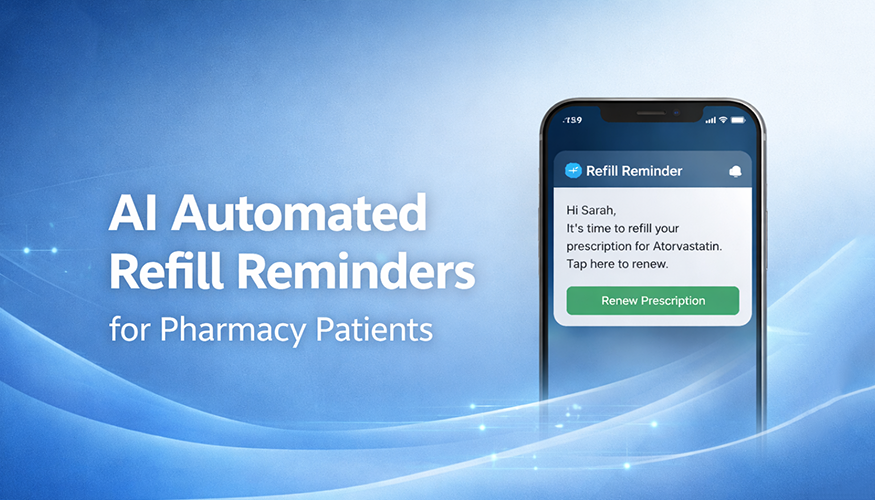
AI Automated Refill Reminders for Pharmacy Patients
Elizabeth Long
Top Business Messaging Platforms with AI (2026 Guide)
Elizabeth Long
Omnichannel Marketing Automation: Strategy & Tools
Elizabeth Long
Customer Communication Platform with AI & Omnichannel
Elizabeth Long
After Hours Medical Answering Service with AI
Elizabeth Long