


Table of Contents
- What Is AI Sales Outreach for Staffing Firms?
- Can AI Agents Make Outbound Calls?
- Why Staffing Firms Struggle With Sales Outreach
- The Demand Phase in the Staffing Revenue Model
- From Activity-Based Outreach to Controlled Pipeline Creation
- The AI Sales Outreach Workflow for Staffing Firms
- Why Callback Capture Outperforms Traditional Cold Calling
- How AI Improves Staffing Business Development
- AI Technology Powering Modern Staffing Sales
- The Role of AI Outreach Platforms
- The Future of AI Sales Outreach in Staffing
- See How AI Sales Outreach Works in Practice
Try Whippy for Your Team
Experience how fast, automated communication drives growth.
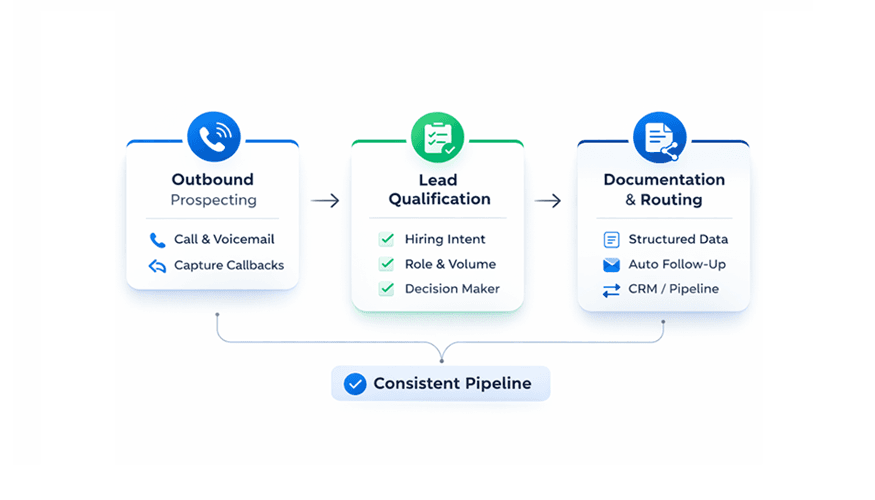
Staffing firms live and die by their ability to consistently generate hiring demand. Yet in many agencies, sales outreach only happens when placements slow down. Recruiters become overloaded with interviews, client communication, and administrative work. Business development becomes reactive instead of systematic.
This is where AI sales outreach for staffing firms is changing the model. More broadly, it reflects how AI for staffing firms, powered by generative AI, is reshaping how agencies approach growth by leveraging AI to build consistent demand.
Instead of relying on recruiter discipline or spare time, modern agencies are implementing AI-driven outreach frameworks that continuously prospect, qualify demand, and document sales intelligence. The result is a repeatable demand-generation engine that supports consistent staffing business development, client acquisition, and pipeline creation.
AI sales outreach is not a single tactic. It is a system that combines demand generation, qualification, and sales intelligence into a unified, measurable pipeline engine.
This guide explains how AI sales outreach works in staffing, the technology behind it, and how agencies are using AI to structure outbound prospecting at scale.
What Is AI Sales Outreach for Staffing Firms?
AI sales outreach for staffing firms refers to the use of artificial intelligence to automate and support outbound prospecting, lead qualification, and follow-up activities that generate new client demand.
In practical terms, this means AI systems can:

Make outbound calls to potential hiring companies
Leave contextual voicemails when calls are missed
Capture callback intent and hiring demand
Qualify leads and identify decision-makers
Send follow-up messages and booking links
Log interactions into the sales pipeline
Instead of manual dialing and scattered notes, AI outreach automation transforms outbound prospecting into a structured workflow powered by automated systems that reduce repetitive tasks.
At its core, this approach combines several technologies:
- AI voice agents for sales
- AI call agents
- AI conversational agents for sales
- AI follow-up automation
- AI lead generation automation
- AI lead qualification automation
Together, these tools enable staffing firms to create a predictable engine for staffing prospecting and client acquisition through a fully integrated AI system.
Can AI Agents Make Outbound Calls?
Yes. One of the most common questions agencies ask is:
Can AI agents make outbound calls?
Yes. Modern AI voice agents for recruiting and sales can place outbound calls to prospect lists, conduct structured conversations, capture intent, and route qualified opportunities to the appropriate team member.
AI agents are capable of handling each phone call as a structured interaction, including:
- Calling leads from a CRM list
- Conducting AI cold calling for staffing agencies
- Leaving personalized AI voicemail drops
- Capturing callback requests
- Identifying whether a company is hiring
- Recording conversation transcripts
This capability allows firms to implement AI outbound calling for staffing firms without requiring recruiters to manually dial hundreds of prospects.
Why Staffing Firms Struggle With Sales Outreach
Many staffing agencies face the same structural problem.
Recruiters are responsible for managing the entire recruiting process, including many time-consuming responsibilities that could be improved by automating repetitive tasks, such as:
- placements
- client communication
- candidate sourcing
- administrative documentation
Sales outreach becomes an afterthought.
This leads to several predictable issues:
- inconsistent staffing sales outreach
- reactive staffing firm lead generation
- limited visibility into the staffing sales pipeline
- missed hiring demand signals
In practice, outreach becomes dependent on individual effort rather than a repeatable system.
AI changes this dynamic by introducing outbound prospecting automation that runs continuously regardless of recruiter availability.
The Demand Phase in the Staffing Revenue Model
To understand why AI sales outreach is so effective, it is important to look at how staffing revenue is actually generated.
Most staffing firms operate across four core phases:
1. Demand identification (finding companies that are hiring)
2. Qualification (validating hiring needs and intent)
3. Engagement (converting conversations into opportunities)
4. Placement (filling roles with candidates)
AI sales outreach operates primarily in the first two phases: demand identification and qualification.
The problem is that many agencies over-index on fulfillment and under-invest in demand generation.
Sales outreach sits entirely in the demand phase.
This is where firms:
- identify companies with active hiring needs
- validate whether demand exists
- capture intent and opportunity signals
- convert conversations into qualified pipeline
In traditional models, this phase is inconsistent and dependent on recruiter availability.
AI changes that.
AI sales outreach systems are designed to continuously operate in the demand phase by:
- running outbound prospecting at scale
- capturing hiring signals through conversations and callbacks
- structuring intent into classified opportunities
- feeding qualified demand directly into the sales pipeline
Instead of waiting for inbound leads or reacting to slow periods, staffing firms can create a continuous demand-generation engine.
This is the shift from reactive outreach to systematic pipeline creation.
The objective is not aggressive automation. It is controlled pipeline creation.
From Activity-Based Outreach to Controlled Pipeline Creation
Traditional outbound sales often focuses on volume.
- More calls
- More emails
- More contact attempts
This approach leads to spam dialing, low-quality conversations, and inconsistent results.
AI changes this by shifting the focus from activity to intent capture.
Instead of asking “How many companies did we contact?”, the question becomes:
“How much real hiring demand did we identify?”
In AI-driven outreach systems:
- every call is designed to capture intent
- every voicemail invites a response
- every callback becomes a qualification opportunity
- every interaction generates structured data
This is what defines signal-based prospecting.
Rather than relying on volume, staffing firms operate based on:
- hiring signals
- engagement behavior
- conversation outcomes
- decision-maker responses
The result is not more outreach.
The result is a controlled, measurable pipeline built on real demand signals.
The AI Sales Outreach Workflow for Staffing Firms
The most effective AI sales outreach systems follow a structured workflow that combines outbound prospecting with intelligent qualification and documentation.
Below is a typical AI-powered workflow.
1. Prospect Identification
The process begins with identifying companies that may have hiring demand.
These prospects may come from CRM systems, as well as:
- job board activity
- CRM lists
- industry databases
- LinkedIn signals
AI can support AI prospecting automation for recruiters by analyzing signals and building prospect lists.
This feeds the sales prospecting automation layer.
2. AI Outbound Prospecting
Once prospects are identified, AI outbound prospecting begins.
AI voice agents contact companies using structured outreach scripts designed for staffing sales, including sending personalized messages based on role, industry, and hiring signals.
Typical AI conversations include:
- introducing the staffing firm
- asking about hiring needs
- identifying current recruiting challenges
- determining decision-maker roles
This stage is where AI outbound sales automation becomes most visible.
Instead of recruiters dialing manually, AI sales agents perform initial outreach at scale.
3. Voicemail and Callback Capture Workflows
In outbound sales, a large percentage of calls go unanswered. Traditionally, these missed calls are lost opportunities.
AI changes this by turning missed connections into structured pipeline through callback capture workflows.
Instead of treating voicemail as a dead end, AI systems use it as the starting point of a new interaction.
Here is how callback capture works operationally:
Step 1: AI leaves a contextual voicemail
When a call is not answered, the AI agent leaves a personalized message referencing hiring activity, role types, or industry context. The goal is to prompt a response, not just deliver information, while maintaining positive candidate experiences and brand perception during outreach.
Step 2: The system captures callback intent
The voicemail invites the prospect to call back or engage. When a callback occurs, the system automatically recognizes the interaction and links it to the original outreach attempt.
Step 3: AI answers and continues the conversation
Instead of routing to voicemail again or missing the opportunity, an AI voice agent answers the callback in real time and resumes the conversation.
Step 4: Qualification happens during the callback
The AI agent asks structured questions to determine:
- whether the company is actively hiring
- what roles they are filling
- urgency and hiring volume
- decision-maker involvement
This transforms a missed call into a qualified sales conversation.
Step 5: The opportunity is documented and classified
After the interaction, the system generates:
- a lead classification (High Intent, Follow-Up Required, Callback Pending, Not Interested)
- a structured summary of the conversation
- a transcript and call recording
This ensures that every callback becomes documented sales intelligence, not a forgotten interaction.
4. AI Lead Qualification and Sales Intelligence
When a live conversation occurs, AI systems do more than capture information. They transform interactions into structured sales intelligence.
AI agents can identify:
- whether the company is actively hiring
- the types of roles being filled
- hiring urgency
- decision-maker authority
This stage performs AI lead qualification automation, converting conversations into actionable insights.
But the real advantage is what happens next.
Turning Conversations Into Structured Data
Every interaction is automatically recorded and processed.
AI systems generate structured insights that enrich customer profiles, including:
- full transcripts of conversations
- structured summaries of key details
- standardized data fields across all outreach
This eliminates the need for manual note-taking and ensures consistency across the entire sales process.
Capturing Hiring Demand Signals
Across hundreds or thousands of conversations, AI systems begin to identify patterns in the market.
They can detect:
- which industries are actively hiring
- what roles are in demand
- when hiring urgency increases
- which companies are most likely to convert
This transforms outbound prospecting into a continuous source of real-time hiring demand intelligence.
Decision-Maker Tracking and Context
AI also tracks who is involved in hiring decisions and how they engage.
Over time, this builds a structured record of:
- decision-makers and influencers
- engagement history
- responsiveness to outreach
- preferred communication patterns
This allows future conversations to be more targeted, relevant, and effective.
From Qualification to Intelligence-Driven Pipeline
The system can classify leads into categories such as:
- High Intent
- Follow-Up Required
- Callback Pending
- Not Hiring
But unlike traditional workflows, this classification is backed by structured data, not guesswork.
Instead of fragmented call notes, staffing firms now operate with:
- consistent data
- trackable signals
- clear pipeline visibility
This is where AI sales outreach becomes more than automation.
It becomes a system for capturing, organizing, and acting on real market signals.
5. Automated Follow-Up and Engagement
Once a prospect shows interest, AI follow-up automation continues the process.
The system may execute follow-up through automated workflows, such as:
- send booking links via SMS or email
- deliver follow-up messages
- confirm meeting times
- provide additional information
This is part of broader AI sales engagement automation, which ensures every interested lead receives consistent follow-up.
6. Routing Qualified Opportunities
When leads meet defined criteria, the system routes them to the appropriate account manager.
Actions may include:
- live call transfer
- meeting scheduling
- CRM updates across connected CRM systems
- pipeline entry
These workflows support sales pipeline automation and improve visibility into staffing sales processes.
From Outreach to a Unified Demand System
When combined, these components form a complete system:
- outbound prospecting identifies opportunities
- callback workflows capture intent
- qualification structures conversations
- intelligence layers convert data into insight
Together, they transform sales outreach from a set of activities into a continuous, intelligence-driven demand generation system.
Why Callback Capture Outperforms Traditional Cold Calling
In many markets, callback-driven workflows outperform high-volume dialing.
This is because:
- prospects respond on their own time
- conversations start with higher intent
- outreach feels less intrusive
- every interaction is captured and structured
The goal is not simply making contact.
The goal is capturing intent and converting it into pipeline.
How AI Improves Staffing Business Development
The introduction of AI-driven outreach creates measurable operational improvements.
Consistent Prospecting: AI systems ensure continuous staffing prospecting, independent of recruiter workload.
Structured Client Acquisition: Instead of sporadic outreach, firms gain a reliable staffing client acquisition framework.
Standardized Sales Process: AI helps standardize the staffing sales process across teams.
Better Pipeline Visibility: With automated logging and classification, agencies gain a clear view of their staffing sales pipeline.
Reduced Manual Work: Recruiters spend less time on dialing and documentation, and more time closing deals and placing candidates.
AI Technology Powering Modern Staffing Sales
Several technologies are converging to enable AI-driven outreach.
These include:
- AI call agents
- AI voice agents for sales
- AI conversational agents for sales
- AI SDR systems
- AI staffing tools
Together they form a new category of AI recruiting technology and staffing sales tools that support both recruiting and business development.
This transformation reflects the broader adoption of AI in the staffing industry, where agencies are implementing AI recruiting automation and sales automation simultaneously.
The Role of AI Outreach Platforms
Modern platforms combine multiple capabilities into a unified system for staffing sales automation.
For example, Whippy’s AI communication platform enables businesses to manage voice, messaging, and automation in a single environment.
Through solutions like Voice AI, teams can deploy AI agents that handle inbound and outbound conversations, automate follow-ups, and manage engagement workflows.
Explore how Whippy’s Voice AI helps staffing firms automate outreach, capture hiring demand, and qualify leads.
Platforms like this allow staffing firms to implement:
- sales conversation automation
- recruiting outreach automation
- recruiting business development automation
without building complex infrastructure.
The Future of AI Sales Outreach in Staffing
AI is rapidly becoming foundational to how staffing firms generate demand.
In the coming years, agencies will increasingly rely on:
- AI outbound prospecting
- AI sales outreach automation
- AI recruiting automation
- AI staffing tools
to maintain competitive sales pipelines.
Instead of reactive outreach, firms will operate structured demand-generation engines that continuously identify hiring opportunities.
The goal is not aggressive automation. The goal is controlled pipeline creation.
This means moving away from:
- high-volume, low-context outreach
- disconnected contact attempts
- unstructured sales activity
And toward:
- signal-based prospecting
- structured conversations
- intent-driven qualification
- measurable pipeline development
This is the fundamental shift in how AI sales outreach for staffing firms operates.
See How AI Sales Outreach Works in Practice
AI sales outreach is transforming how staffing firms approach prospecting, qualification, and client acquisition.
By combining AI outbound calling, lead qualification automation, voicemail workflows, and pipeline automation, agencies can build a repeatable system for generating hiring demand.
If you want to see how AI-powered communication workflows can support your staffing sales process, the best next step is to experience it directly.
Request a demo to see how AI sales outreach helps staffing firms generate qualified hiring demand.
Discover how AI agents can help your team automate outreach, capture opportunities, and turn prospecting into a scalable growth engine.
Table of Contents
Table of Contents
- What Is AI Sales Outreach for Staffing Firms?
- Can AI Agents Make Outbound Calls?
- Why Staffing Firms Struggle With Sales Outreach
- The Demand Phase in the Staffing Revenue Model
- From Activity-Based Outreach to Controlled Pipeline Creation
- The AI Sales Outreach Workflow for Staffing Firms
- Why Callback Capture Outperforms Traditional Cold Calling
- How AI Improves Staffing Business Development
- AI Technology Powering Modern Staffing Sales
- The Role of AI Outreach Platforms
- The Future of AI Sales Outreach in Staffing
- See How AI Sales Outreach Works in Practice
Try Whippy for Your Team
Experience how fast, automated communication drives growth.

Related Articles
Best AI Recruiting Tools for Franchise Staffing
 Elizabeth Long
Automate Customer Support: Complete Guide to AI & Tools
Elizabeth Long
The Staffing Operating System for Avionté
Elizabeth Long
Automated License Verification for Staffing Agencies
Elizabeth Long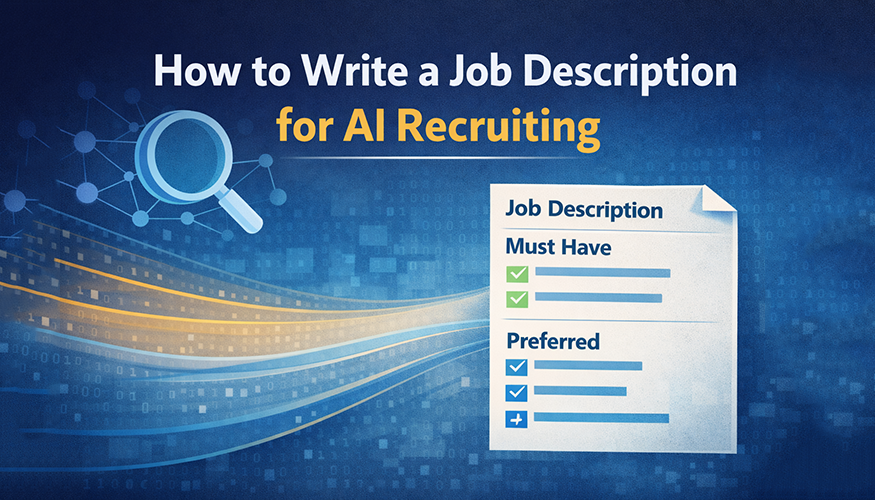
Write Job Descriptions That Make AI Recruiters Perform
Elizabeth Long
Whippy AI Recruiter: Independent Bias Audit Results
Elizabeth Long