


Table of Contents
- What Are Staffing Check-Ins?
- Why Staffing Check-Ins Matter for Worker Retention
- When Staffing Check-Ins Should Happen
- Assignment Check-Ins vs Shift Reminders
- Example Employee Check-In Questions
- Common Issues Staffing Check-Ins Detect Early
- Automated Staffing Check-Ins: How They Work
- The Staffing Check-In Framework and Workflow
- Signs a Worker May Drop Off an Assignment
- Measuring the Impact of Staffing Check-Ins
- How Whippy Automates Staffing Check-Ins
- Final Thoughts
- FAQs About Staffing Check-Ins
Try Whippy for Your Team
Experience how fast, automated communication drives growth.
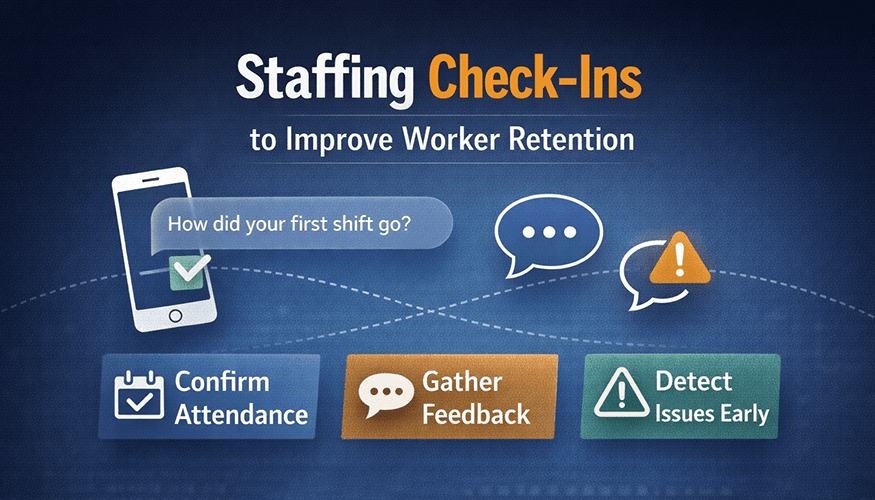
Staffing check-ins are structured follow-up messages sent to workers during an assignment to confirm schedules, gather feedback, and identify issues early. These check-ins help staffing agencies improve worker retention, reduce assignment drop-offs, and maintain operational continuity throughout the assignment lifecycle.
Staffing agencies operate in a fast-moving environment where assignments start quickly, workers rotate frequently, and communication gaps can easily lead to missed shifts or early turnover. To prevent these issues, staffing check-ins maintain communication throughout the assignment lifecycle and complement other operational touchpoints such as team check ins, employee performance check ins, and structured employee progress check ins used in broader workforce management.
Instead of relying only on occasional employee check in meetings or formal performance conversations, staffing teams use proactive follow-ups to monitor worker experience and maintain assignment stability.
What Are Staffing Check-Ins?
Assignment check-ins, often referred to as staffing check-ins, are structured follow-up messages sent to workers during an assignment to confirm schedules, gather feedback, and identify potential issues early. These check-ins allow staffing teams to detect problems before they escalate into missed shifts, disengagement, or assignment drop-offs.
Unlike traditional employee check in meetings used in performance management, staffing check-ins focus on operational continuity, workforce engagement, and worker retention during active placements.
A well-designed employee check in workflow helps staffing teams build consistent employee communication automation and ensures important employee communication messages reach workers at the right moments during an assignment:

confirm attendance and availability
monitor worker satisfaction
detect operational issues early
maintain clear staffing communication
strengthen long-term staffing workforce retention
Why Staffing Check-Ins Matter for Worker Retention
In staffing operations, most assignment failures happen quietly. Workers rarely report issues through formal employee feedback meetings or structured management one on ones. Instead, problems emerge during the first few shifts.
Common examples include:
• workers unclear about schedules or locations
• unexpected commute challenges
• dissatisfaction with the role or worksite
• communication gaps between recruiters and workers
Without proactive follow-up, these issues often lead to missed shifts, disengagement, or assignment abandonment.
Consistent staffing employee check ins help prevent this by creating early visibility into worker experience. They support stronger employee retention strategies, enable regular employee engagement check ins, improve workforce engagement, and strengthen overall client service quality staffing outcomes.
Assignment check-ins play a particularly important role after a worker has been placed. While assignment confirmations ensure a worker accepts the role, staffing check-ins ensure the assignment remains successful. These follow-ups act as a critical staffing assignment follow up process that allows staffing teams to detect dissatisfaction early, monitor worker progress, and resolve operational friction before it leads to missed shifts or early turnover. This type of structured outreach also strengthens long-term staffing retention communication and supports stronger staffing retention strategies.
When Staffing Check-Ins Should Happen
Effective staffing check ins occur at strategic moments during the assignment lifecycle.
Before a Shift
A quick reminder or availability confirmation helps prevent no-shows and ensures the worker is prepared.
Example SMS employee check ins:
Hi Alex, quick check-in before your shift tomorrow at 7 AM at Northside Warehouse. Everything still good on your end?
This type of worker follow up message confirms attendance and reduces last-minute surprises.
Benefits include:
preventing schedule misunderstandings
improving communication with new workers
reducing operational risk
After the First Day
The first shift often determines whether a worker will stay engaged. A worker first day check in helps staffing teams detect early friction.
Example employee follow up message:
Hi Alex, how did your first day go? Was the schedule and location clear?
This simple worker assignment follow up functions as a staffing follow up after first day and can reveal issues such as unclear instructions, workplace concerns, or role mismatch.
Early feedback supports early issue detection workforce management and improves the chances of long-term assignment success.
During the Assignment
For longer placements, regular follow-ups maintain communication and reinforce engagement.
Staffing teams often implement weekly check ins or monthly check ins to monitor progress.
Example check in questions for employees:
• Is everything going smoothly with your assignment?
• Do you have everything you need to succeed in your role?
• Are there any concerns we should address?
These employee check in questions resemble traditional manager check in questions used in performance conversations, employee development discussions, and structured employee development meetings, but they focus on operational success rather than formal evaluation.
Assignment Check-Ins vs Shift Reminders
Although they may appear similar, assignment check-ins and shift reminders serve different purposes.
Shift Reminders | Assignment Check-Ins |
|---|---|
Sent before a shift | Sent during the assignment |
Focus on attendance | Focus on worker experience |
Prevent missed shifts | Detect issues early |
Scheduling tool | Retention and engagement tool |
Shift reminders protect daily coverage and help reduce no-shows by confirming attendance before a shift. Many staffing agencies use automated shift reminders to ensure workers receive timely notifications and schedule confirmations.
Assignment check-ins protect long-term assignment stability and workforce engagement.
Together they form a complete communication strategy.
Example Employee Check-In Questions
Many organizations use employee check in questions during formal manager employee meetings or team communication meetings. Staffing check-ins adapt these questions to operational contexts.
Examples include:
Weekly check in questions
• How is the assignment going so far?
• Are the shift times working well for you?
• Is there anything we can do to support you?
Monthly check in questions
• Are you satisfied with the role and responsibilities?
• Are there any improvements that would help you perform better?
• Would you be interested in similar assignments in the future?
These questions for employee meetings can also be used during informal one on one check ins, helping recruiters guide conversations using practical one on one meeting questions that support worker engagement and clarity.
Common Issues Staffing Check-Ins Detect Early
Consistent follow-ups help identify operational challenges before they escalate.
Examples include:
• confusion about job responsibilities
• scheduling misunderstandings
• workplace dissatisfaction
• communication breakdowns
By enabling early issue detection workforce management, staffing teams can resolve problems quickly and maintain stable assignments.
This proactive approach also improves worker satisfaction check ins, strengthens worker engagement messaging, and supports better team check ins between recruiters and workers while protecting long-term client relationships.
Automated Staffing Check-Ins: How They Work
Assignment check-ins are one of several AI-powered staffing workflows described in the AI Agents Use Cases for Staffing guide, where agencies use automation to improve communication, retention, and operational visibility.
An automated employee check in process typically follows a structured sequence.
Step 1: Assignment Confirmation
Workers confirm availability and schedule details.
Step 2: Pre-Shift Check-In
A reminder message confirms readiness and reduces attendance risks.
Step 3: First-Day Check-In
A follow-up captures worker experience and identifies early concerns.
Step 4: Ongoing Assignment Check-Ins
Regular communication supports engagement and continuity.
Step 5: Retention Monitoring
Staffing teams review responses and identify potential retention risks.
This system creates a scalable staffing communication automation strategy that improves operational visibility and workforce stability. Staffing check-ins are often part of broader staffing workflow automation use cases that help agencies streamline communication, reduce manual coordination, and improve worker engagement.
Managing worker follow-ups manually can be difficult for recruiters overseeing dozens or even hundreds of active assignments. Automated staffing check-ins allow agencies to maintain consistent communication with workers without increasing recruiter workload. Automation ensures that every assignment receives timely automated staffing follow ups, including automated worker check ins and proactive automated worker engagement messages triggered at critical moments during the placement lifecycle.
Manual follow-ups often create operational challenges for staffing teams. Recruiters must remember to send messages, track responses, and follow up with workers individually. Automation solves many of these challenges by triggering staffing check-ins automatically based on assignment events.
Manual vs Automated Staffing Check-Ins
Manual Follow-Ups | Automated Check-Ins |
|---|---|
Inconsistent communication | Scheduled automatically |
Easy to forget follow-ups | Triggered by assignment events |
Difficult to track responses | Centralized response tracking |
Hard to scale for large workforces | Works for hundreds or thousands of workers |
Recruiter-dependent process | Reliable automated workflows |
The Staffing Check-In Framework and Workflow
A successful staffing communication strategy follows a structured process. The staffing check-in framework helps agencies maintain consistent communication with workers while improving assignment stability and retention. This framework also reflects the typical workflow staffing teams use to monitor assignments and detect issues early.
A typical staffing check-in framework includes five key stages:
1. Assignment confirmation
Confirm that the worker understands the assignment details, including schedule, location, and expectations.
2. Pre-shift check-in
A reminder message sent before the shift confirms availability and prevents last-minute no-shows.
3. First-day check-in
A follow-up message after the worker’s first shift gathers feedback and identifies early issues.
Example message:
Hi Alex, how did your first day go? Was the schedule and location clear?
4. Mid-assignment check-in
Ongoing follow-ups during the assignment help monitor worker satisfaction and operational clarity while supporting lightweight employee performance check ins and ongoing employee progress check ins during longer placements.
5. Retention monitoring
Staffing teams review responses and follow up with workers who report concerns, ensuring problems are resolved before they lead to assignment drop-offs.
Using this framework allows staffing teams to move from reactive follow-ups to a proactive communication strategy that protects assignment success.
Signs a Worker May Drop Off an Assignment
Even with strong communication, some workers may show early signals that they are at risk of abandoning an assignment. Recognizing these signals allows staffing teams to intervene quickly and maintain assignment stability.
Common warning signs include:
- Delayed responses to messages: Workers who previously responded quickly may suddenly take longer to reply to staffing follow-up messages.
- Negative or frustrated tone in responses: Changes in tone can signal dissatisfaction with the assignment or workplace environment.
- Confusion about schedules or responsibilities: Repeated questions about shift details may indicate that expectations were not clearly understood.
- Repeated concerns about shifts or location: Workers who repeatedly mention scheduling issues or commute difficulties may be at risk of disengaging.
- Reduced engagement with check-ins: Workers who stop responding to staffing check-ins entirely may be considering leaving the assignment.
Consistent staffing check-ins help identify these signals early so recruiters can address concerns before they lead to missed shifts or assignment drop-offs, strengthening overall worker retention communication across the assignment lifecycle.
Measuring the Impact of Staffing Check-Ins
To understand whether staffing check-ins are improving retention and assignment stability, staffing teams should track several operational metrics. Monitoring these indicators helps agencies identify communication gaps, detect retention risks, and improve workforce engagement over time.
Important staffing metrics include:
- First-day drop-off rate: The percentage of workers who fail to return after their first shift.
- Assignment completion rate: The percentage of workers who successfully complete their assignments.
- Worker response rate: The percentage of workers who respond to staffing check-ins or automated follow-up messages.
- Worker satisfaction score: Feedback gathered from check-ins that indicates worker engagement and overall experience.
- Issue resolution time: The time it takes for staffing teams to identify and resolve problems reported by workers.
Staffing check-ins also provide valuable insights into both worker and client experience. By reviewing responses to follow-up messages, agencies can identify recurring operational issues, measure worker satisfaction trends, and detect early signals of assignment instability. These insights allow staffing teams to refine their communication strategies, support ongoing workplace feedback discussions, and improve long-term client service quality.
How Whippy Automates Staffing Check-Ins
Modern messaging platforms make it easier than ever to implement structured staffing check-ins and maintain consistent communication with workers.
Messaging-based communication is particularly effective for staffing check-ins because it allows recruiters and workers to communicate quickly and naturally during active assignments. Unlike email, which often goes unread during shifts, text messaging provides a faster and more reliable communication channel.
Messaging offers several advantages for staffing agencies managing large workforces:
Higher response rates
Workers are far more likely to read and respond to a message on their phone than to check email while on the job. Higher response rates allow staffing teams to confirm schedules and detect issues earlier.
Faster issue detection
Because messaging is immediate, staffing teams can quickly identify problems such as schedule confusion, workplace concerns, or transportation issues before they escalate into missed shifts or assignment drop-offs.
Conversational communication
Messaging creates a natural back-and-forth interaction between recruiters and workers. This conversational style encourages workers to share feedback and report concerns more openly.
Easier worker engagement
Short messages are easier for workers to respond to than formal employee check-in meetings or long email threads. Messaging allows staffing teams to maintain engagement without interrupting the worker’s schedule.
With Whippy, staffing teams can automate key communication workflows, including:
• SMS employee check ins
• scheduled automated staffing communication
• automated worker follow up messages
• proactive worker engagement messaging
These automated systems ensure every assignment receives consistent attention while enabling scalable employee communication automation, delivering consistent employee communication messages, and reducing manual coordination.
Instead of relying on reactive follow-ups, staffing agencies can build a proactive communication framework that protects assignment success.
Final Thoughts
Successful staffing operations depend on more than just filling positions. They depend on maintaining strong communication with workers throughout the assignment lifecycle.
Staffing check ins help agencies detect issues early, strengthen worker relationships, and maintain assignment stability.
By combining structured communication with workforce communication automation and scalable employee communication automation, staffing teams can improve retention, strengthen worker retention communication, protect service quality, and scale their operations effectively.
If you want to see how automated messaging can transform your staffing workflows, request a demo today.
Request a Demo ↗
FAQs About Staffing Check-Ins
Q: What are staffing check-ins?
A: Staffing check-ins are structured follow-up messages sent to workers during an assignment to confirm schedules, gather feedback, and detect issues early. They help staffing teams improve worker retention, reduce assignment drop-offs, and maintain operational continuity across placements.
Q: When should staffing check-ins be sent?
A: Staffing check-ins should be sent at key moments during the assignment lifecycle, including before a shift, after the worker’s first day, and periodically throughout the assignment. These touchpoints help staffing teams detect operational issues early and maintain consistent communication with workers.
Q: What is the difference between shift reminders and staffing check-ins?
A: Shift reminders are typically sent before a shift to confirm attendance. Staffing check-ins occur during the assignment and focus on worker experience, satisfaction, and issue detection. While reminders protect shift coverage, staffing check-ins help maintain assignment stability and improve worker retention.
Q: What questions should be asked during staffing check-ins?
A: Effective staffing check-in questions focus on worker experience and operational clarity. Common questions include:
• How did your first shift go?
• Is the schedule clear and manageable?
• Do you have everything you need to succeed in the role?
• Are there any issues we should be aware of?
These questions help staffing teams detect problems early and improve worker engagement.
Q: How do automated staffing check-ins work?
A: Automated staffing check-ins use messaging workflows to send scheduled follow-up messages at key moments during an assignment. These automated messages may include pre-shift confirmations, first-day check-ins, and periodic engagement messages. Automation ensures consistent communication with workers without increasing recruiter workload.
Q: Why are staffing check-ins important for worker retention?
A: Staffing check-ins help identify dissatisfaction, confusion, or operational friction early in the assignment. By addressing these issues quickly, staffing teams can strengthen worker relationships, improve assignment stability, and support long-term workforce retention.
Table of Contents
Table of Contents
- What Are Staffing Check-Ins?
- Why Staffing Check-Ins Matter for Worker Retention
- When Staffing Check-Ins Should Happen
- Assignment Check-Ins vs Shift Reminders
- Example Employee Check-In Questions
- Common Issues Staffing Check-Ins Detect Early
- Automated Staffing Check-Ins: How They Work
- The Staffing Check-In Framework and Workflow
- Signs a Worker May Drop Off an Assignment
- Measuring the Impact of Staffing Check-Ins
- How Whippy Automates Staffing Check-Ins
- Final Thoughts
- FAQs About Staffing Check-Ins
Try Whippy for Your Team
Experience how fast, automated communication drives growth.

Related Articles

Best AI Recruiting Tools for Franchise Staffing
 Elizabeth Long
The Staffing Operating System for Avionté
Elizabeth Long
Automated License Verification for Staffing Agencies
Elizabeth Long
Write Job Descriptions That Make AI Recruiters Perform
Elizabeth Long
The Candidates You Need Are Already in Your ATS
Elizabeth Long
Payroll Communication for Staffing Agencies
Elizabeth Long